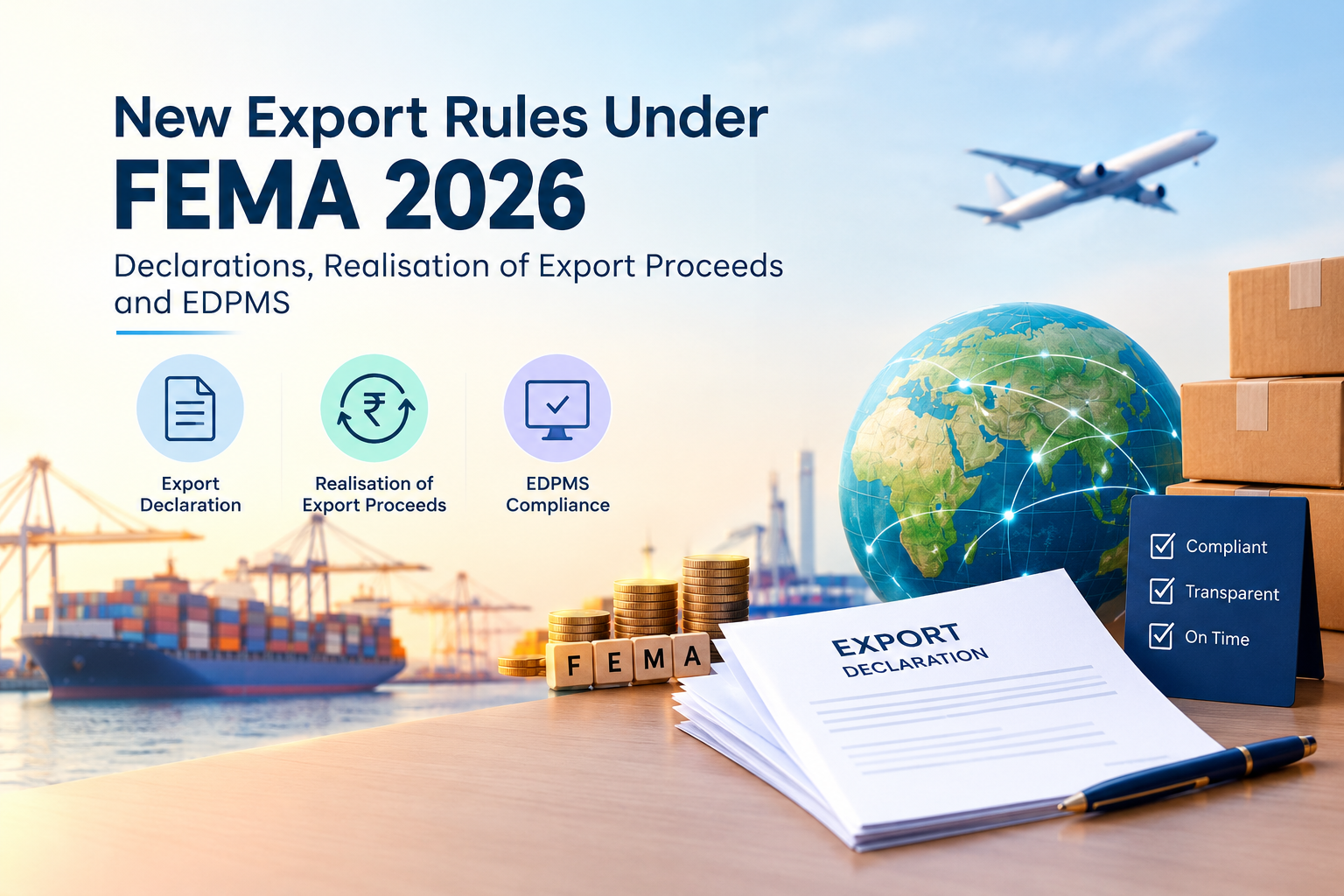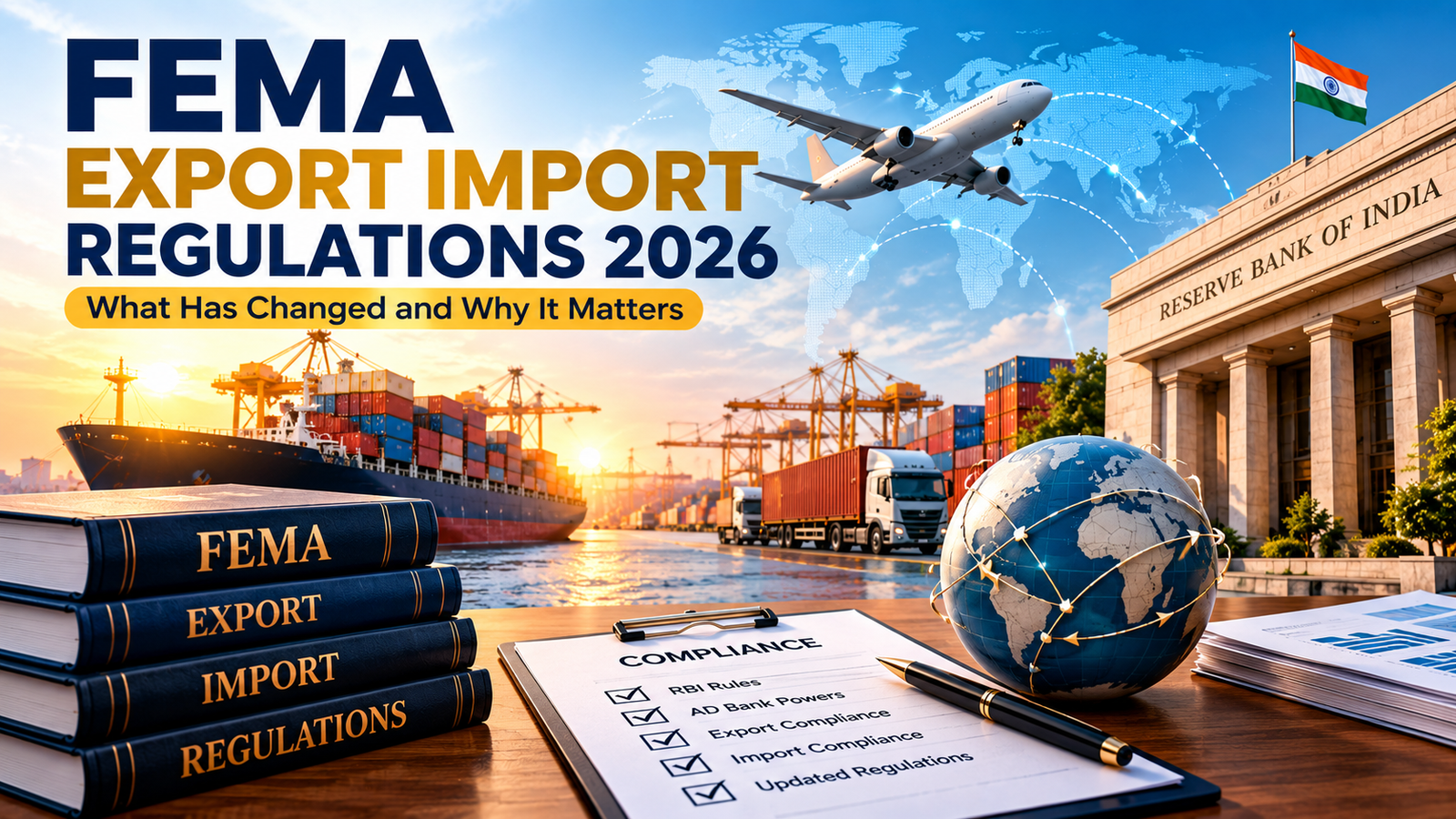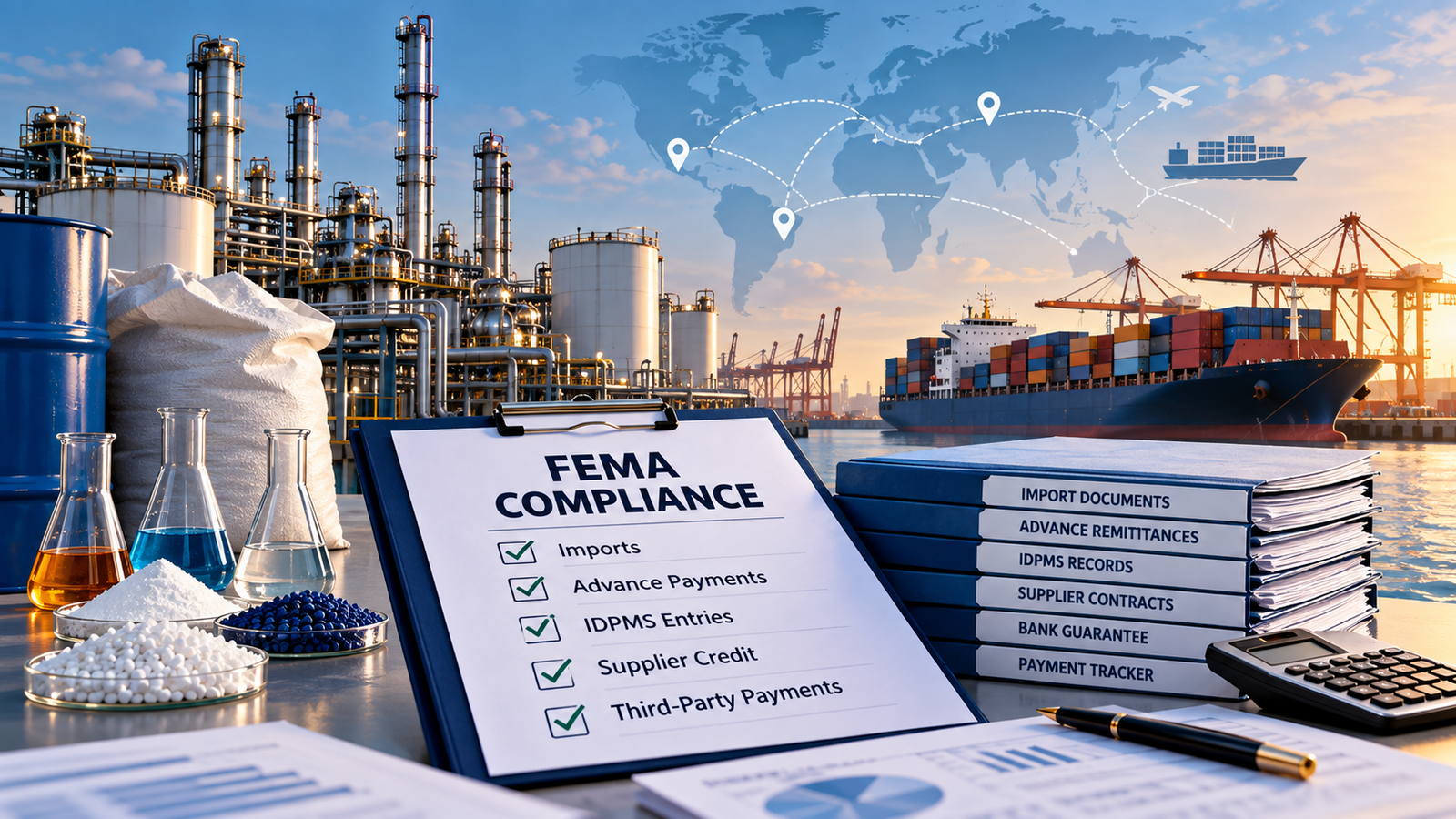
Exporting goods or services from India involves more than securing overseas customers and receiving payments. Businesses must also comply with foreign exchange regulations, submit the required export declarations, track outstanding receivables and maintain accurate records with their Authorised Dealer (AD) Bank.
The Foreign Exchange Management (Export and Import of Goods and Services) Regulations, 2026, introduced by the Reserve Bank of India (RBI), came into effect on 1 October 2026. The framework replaced the earlier 2015 export regulations, subject to the applicable transitional provisions. Subsequent amendments also revised the timelines for realising export proceeds.
For exporters, understanding the realisation of export proceeds under FEMA 2026 is essential to managing payment deadlines and avoiding unnecessary compliance issues.
This guide explains export declaration requirements, realisation timelines, EDPMS compliance and practical steps that businesses can take to strengthen their export compliance processes.
1. Understanding the New FEMA 2026 Export Rules
The 2026 framework updates the regulatory requirements for exporting goods and services from India. It also provides Authorised Dealer Banks with an expanded role in handling export and import transactions.
The main compliance areas for exporters include:
- Filing the applicable Export Declaration Form (EDF).
- Receiving and repatriating export proceeds within the prescribed period.
- Maintaining accurate invoices, shipping documents and payment records.
- Reconciling export transactions with the Export Data Processing and Monitoring System (EDPMS), where applicable.
- Addressing overdue receivables and obtaining extensions when permitted.
These requirements apply differently depending on the nature of the export, the payment arrangement and the applicable regulatory provisions. Exporters should therefore review the rules relevant to their transactions rather than applying a single process to every export.
2. Export Declaration Requirements Under FEMA
Export declarations help the authorities and banking system track the value and details of goods and services exported from India.
Under the 2026 regulations, exporters must comply with the applicable EDF requirements, subject to relevant provisions and exemptions.
EDF requirements for goods exports
For goods exports, the declaration is generally submitted at the time of export to the specified authority. For exports processed through an Electronic Data Interchange (EDI) port, the EDF is treated as submitted through the shipping bill, in accordance with the applicable procedure.
Goods exporters should ensure that their shipping bills, commercial invoices, purchase orders and payment records contain consistent information.
EDF requirements for service exports
Service exporters must also follow the applicable declaration requirements. Under the 2026 framework, the process and reporting timelines depend on the type of service and the relevant regulatory provisions.
Businesses providing consulting, IT, software, digital marketing, design and other professional services to overseas clients should maintain invoices, contracts, payment confirmations and supporting records.
Exporters should confirm the appropriate submission process with their AD Bank before assuming that an invoice or inward remittance alone satisfies the declaration requirement.
What about software exports and SOFTEX?
Software exporters should review the applicable SOFTEX reporting requirements and determine whether their transactions fall within the relevant reporting framework.
The documentation process may differ depending on the nature of the software export, the delivery method and the applicable reporting rules.
Practical checklist for export declarations:
- Maintain complete commercial invoices and contracts.
- Check that the declared export value matches the supporting documents.
- Retain shipping bills and other applicable export records.
- Confirm EDF and SOFTEX requirements with the relevant authority or AD Bank.
- Keep evidence of payments received against each export.
3. Realisation of Export Proceeds Under FEMA 2026
The realisation of export proceeds refers to receiving payment for exported goods or services and repatriating the proceeds to India as required under FEMA.
One of the important changes in the 2026 framework is the revised time limit for realisation and repatriation of export proceeds.
Under Regulation 5 of the 2026 regulations, as amended with effect from 1 October 2026, the general period for realisation and repatriation is nine months for the applicable export transactions. The relevant period is generally calculated from the date of shipment for goods exports and the date of invoice for service exports.
For goods exported to an overseas warehouse, the applicable period is calculated from the date the goods are sold from that warehouse.
For exports invoiced or settled in Indian rupees, the amended period is generally 12 months, subject to the applicable provisions.
Project exports may follow the payment terms prescribed under the relevant contract and applicable regulations.
Exporters should verify the precise deadline applicable to their transaction, including any transitional provisions, exceptions or permitted extensions.
Can an AD Bank extend the realisation period?
An Authorised Dealer Bank may consider an extension where the regulatory conditions are satisfied and the exporter provides an appropriate request and supporting reasons.
An extension should not be assumed to be automatic. Exporters should contact their bank before the applicable deadline, particularly when a foreign customer has delayed payment or a contractual dispute remains unresolved.
Why timely realisation matters
Delays in receiving export proceeds can result in follow-up questions from the AD Bank and additional documentation requirements.
Businesses with multiple overseas customers may find it difficult to identify overdue payments without a structured receivables-tracking process.
To improve control, exporters should maintain a realisation calendar containing:
- Invoice number and date.
- Customer name and country.
- Export value and currency.
- Contractual payment due date.
- Applicable FEMA realisation deadline.
- Amount received and outstanding balance.
- Bank reference and reconciliation status.
- Follow-up actions and extension requests, where applicable.
Review this calendar weekly so that approaching deadlines and overdue receivables can be addressed promptly.
4. EDPMS Compliance: How Exporters Can Avoid Mismatches
The Export Data Processing and Monitoring System (EDPMS) is used to monitor export transactions and their realisation through the banking system.
Effective EDPMS compliance requires exporters to maintain consistent information across shipping documents, invoices, bank records and inward remittances.
Common EDPMS compliance issues
1. Unmatched inward remittances
A payment may reach the bank without being correctly linked to the corresponding export invoice or shipping bill.
2. Outstanding export entries
Export transactions may remain open because payment has not been received, documentation is incomplete or the records have not been reconciled.
3. Third-party payments
Payments received from an entity other than the overseas buyer may require additional documentation and verification under the applicable rules.
4. Differences between accounting and bank records
The export value, invoice reference, payment amount or currency recorded in the company’s accounting system may not match the information held by the bank.
5. Missing supporting documents
Incomplete invoices, contracts, shipping documents or payment evidence can make it harder to resolve bank queries.
How to improve EDPMS reconciliation
Businesses should conduct regular reconciliation between their accounting records and the export information maintained by their AD Bank.
A practical monthly process includes:
- Prepare a list of all export invoices and related shipping bills.
- Match inward remittances against the correct transactions.
- Identify outstanding or unmatched entries.
- Collect missing documents and correct discrepancies.
- Follow up with the AD Bank regarding unresolved entries.
- Maintain a record of correspondence and corrective actions.
Regular reconciliation helps businesses identify discrepancies early and maintain a clearer picture of their export receivables.
5. FEMA Compliance for Service Exporters
FEMA export compliance is relevant to businesses that provide services to overseas customers, not only companies exporting physical goods.
IT companies, SaaS providers, consultants, freelancers, digital agencies and other professional service businesses may need to comply with applicable export declaration and foreign exchange requirements.
For example, an Indian consulting company may invoice an overseas client every month. If a payment is delayed or received without a clear invoice reference, the business should identify the outstanding amount, review the applicable realisation deadline and coordinate with its AD Bank.
Service exporters should establish a documented process for:
- Issuing invoices with clear payment terms.
- Maintaining client contracts and service records.
- Tracking foreign currency receipts.
- Following applicable EDF or software reporting requirements.
- Matching payments to invoices.
- Reviewing overdue receivables and bank queries.
A consistent process reduces administrative uncertainty and makes it easier to respond when additional documentation is requested.
6. What Should Exporters Do About Overdue Receivables?
Overdue export receivables require timely attention. Businesses should not wait until the end of the financial year to review unpaid invoices or unresolved export entries.
Start by classifying outstanding invoices into three categories:
Approaching the deadline: Contact the customer, confirm the payment status and prepare the supporting documents.
Past the contractual due date: Follow up with the customer and assess whether the delay affects the regulatory realisation deadline.
Past the applicable FEMA deadline: Contact the AD Bank promptly to discuss the available options, required documents and any extension or regularisation process that may apply.
If the delay results from a commercial dispute, customer insolvency or another exceptional circumstance, retain relevant correspondence and supporting evidence.
The appropriate action depends on the facts of the transaction and the applicable regulations. A FEMA consultant can help businesses review their documentation and prepare for discussions with their bank.
7. FEMA Export Compliance Checklist for 2026
Use the following checklist to review your current export compliance process.
- Maintain a complete register of export invoices and shipping bills.
- Confirm the EDF and SOFTEX requirements applicable to each export category.
- Calculate the correct realisation deadline for each transaction.
- Track outstanding invoices and expected payment dates.
- Reconcile bank receipts and applicable EDPMS records regularly.
- Investigate unmatched payments and open export entries.
- Retain supporting documents for third-party payments.
- Contact the AD Bank about overdue receivables and potential extensions.
- Update internal procedures to reflect the applicable FEMA 2026 requirements.
- Review the RBI regulations and directions for any relevant amendments.
Businesses should also pay attention to transitional provisions where export transactions began before 1 October 2026.
Frequently Asked Questions
1. What is the time limit for realisation of export proceeds under FEMA 2026?
The general period under the amended 2026 framework is nine months for applicable export transactions. Exports invoiced or settled in Indian rupees generally have a 12-month period under the relevant provision. The calculation date and any applicable exceptions depend on the transaction type.
2. What is the focus of the new FEMA export rules in 2026?
The framework updates export and import compliance requirements, including declarations, realisation of export proceeds and the role of Authorised Dealer Banks. Exporters should review the applicable regulations and directions to understand their obligations.
3. What is EDPMS compliance?
EDPMS compliance involves ensuring that export transaction records and their realisation are properly tracked and reconciled through the applicable banking process. Exporters should resolve unmatched payments and outstanding entries with their AD Bank.
4. What happens if export proceeds are not received within the prescribed period?
The exporter may need to respond to bank queries and take corrective action under the applicable FEMA framework. Depending on the circumstances, an extension or another permitted process may be available. Businesses should contact their AD Bank promptly rather than ignore overdue entries.
5. Are service exports covered under FEMA 2026?
Yes. The 2026 framework covers exports of goods and services. Service exporters should follow the applicable declaration, documentation, realisation and reporting requirements for their specific transactions.
6. Do service exporters need to submit an Export Declaration Form?
Service exporters are subject to the applicable EDF requirements, with procedures varying by service category and relevant regulatory provisions. They should confirm the reporting process with the specified authority or their AD Bank.
7. Is SOFTEX filing mandatory for every service exporter?
No. SOFTEX requirements depend on the nature of the software export and the applicable reporting framework. Not every service export automatically falls under SOFTEX. Businesses should verify whether their specific transactions require this reporting.
8. Can an AD Bank extend the export proceeds realisation period?
An AD Bank may consider an extension subject to the applicable regulatory conditions and supporting reasons. Exporters should submit requests promptly and obtain confirmation from their bank.
9. How often should exporters reconcile EDPMS records?
Monthly reconciliation is a useful operational practice for identifying mismatches, overdue entries and missing documentation. Businesses with high transaction volumes or frequent foreign receipts may benefit from more frequent reviews.
10. When should a business consult a FEMA expert?
A business should consider professional assistance when it has overdue export receivables, unresolved EDPMS entries, complex third-party payments, questions about declaration requirements or uncertainty about the applicable realisation deadline.
Consult a FEMA Expert for Export Compliance
Managing export declarations, foreign exchange receipts and EDPMS records can become challenging as a business expands internationally.
Femabide Advisorz assists businesses with export compliance reviews, overdue receivables, EDPMS reconciliation and preparation for bank queries.
If your business needs help understanding the FEMA 2026 export rules, seek professional guidance based on your transaction details and supporting documents.
Website: https://femabide.com
Call: 99333 85556
Contact Femabide Advisorz to discuss your export compliance requirements and identify the appropriate next steps.
Disclaimer
This article is intended for general informational purposes and does not constitute legal, financial or regulatory advice. FEMA requirements may vary according to the nature and date of the transaction and subsequent regulatory amendments. Consult the applicable RBI notifications and your Authorised Dealer Bank, or obtain professional advice before making compliance decisions.