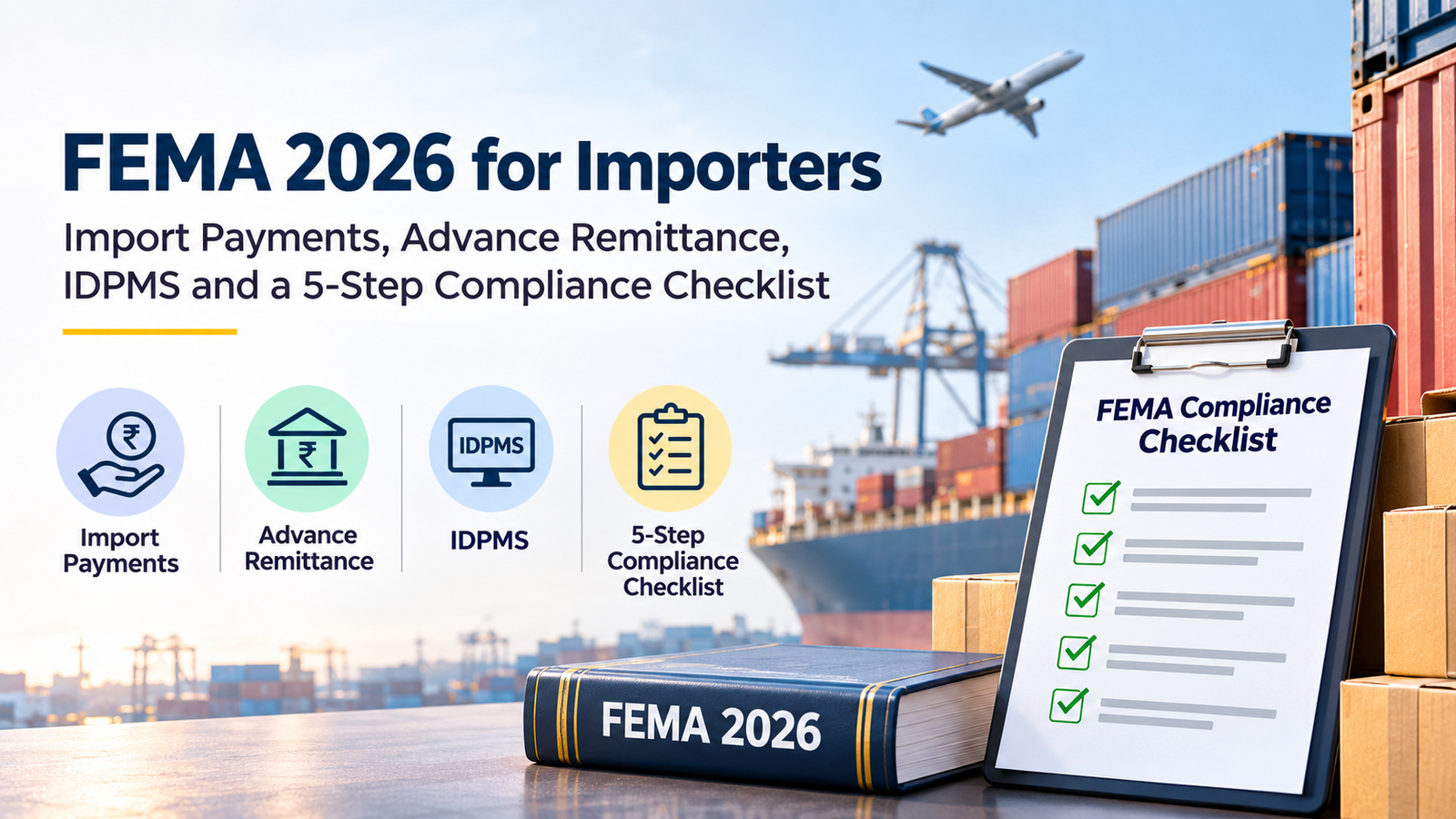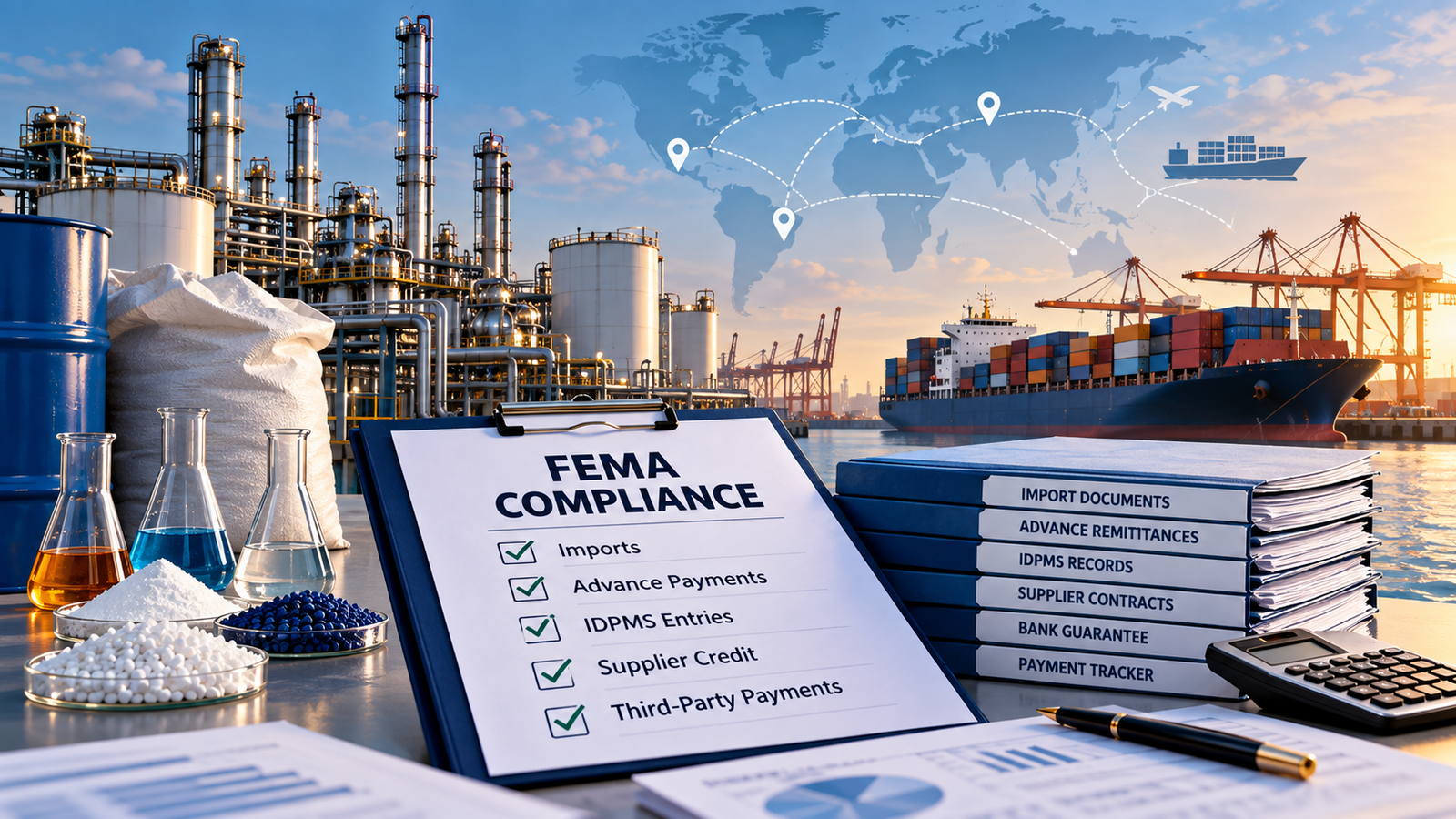
Importers often assume that FEMA is mainly an exporter’s problem. It is not. How you pay your overseas supplier, when you pay, and whether the goods or services actually arrive are all regulated. The Foreign Exchange Management (Export and Import of Goods and Services) Regulations, 2026, effective from 1 October 2026, establish the framework for managing import payments, advance remittances and reporting requirements. This guide covers import payments, advance remittance for import, IDPMS compliance, and a practical FEMA compliance checklist for every business.
Changes Relating to Import Payments
Under Regulation 9 of the new regulations, AD Banks must monitor import payments to ensure they are made within the period specified in the underlying contract. An AD Bank may extend the payment period if the importer requests an extension, explains the delay and the bank is satisfied with the reasons.
Under Regulation 19, AD Banks must establish documented internal policies and standard operating procedures (SOPs) for export and import transactions. These policies must cover documentation, timelines, extensions, advance payments and other relevant procedures. Banks must publish their policies and the main features of their SOPs on their websites.
For importers, that means:
- Documentation and procedures may differ between banks.
- Your internal approval trail, including purchase orders, invoices, contracts and proof of import, becomes more important.
- You should obtain your AD Bank’s written procedures for import payments and advance remittances.
Advance Remittances: The Higher-Risk Area
Paying a foreign supplier before goods or services arrive is common, especially for machinery, raw materials, software licences and specialised services. It also requires careful monitoring because the money has left India before the import has been completed.
Under Regulation 10, an AD Bank may permit advance remittance for imports after satisfying itself that the advance payment requirement is genuine. The bank may establish thresholds above which a standby letter of credit or guarantee is required.
Importers should:
- Track every advance payment against the expected delivery date and contractual timeline.
- Collect proof of import, such as the Bill of Entry for goods, and submit it to the AD Bank.
- Follow up with suppliers on delays before the contractual period expires.
- Request an extension from the AD Bank when the import or payment is delayed.
- Seek a refund and arrange repatriation of the advance if the import cannot be completed within the contractual period or an extension granted by the bank.
Under Regulation 12, if the advance payment is not repatriated within the permitted period, or the relevant IDPMS entry has not been marked off under the regulations, future advance payments for imports by that importer must be supported by an unconditional, irrevocable standby letter of credit or a guarantee from an international bank of repute, or a guarantee from an Indian AD Bank backed by a counter-guarantee from an international bank of repute.
Importers should confirm their AD Bank’s documentation and guarantee requirements before making substantial advance payments.
IDPMS Compliance Requirements
The Import Data Processing and Monitoring System (IDPMS) links import documents, such as the Bill of Entry, to outward remittances made through banks. If an entry remains unmatched or incomplete, it may remain open and attract queries from the AD Bank.
Good IDPMS hygiene means:
- Matching each outward remittance to the correct import document.
- Closing advance payments once the goods are received and the required documents are submitted.
- Clearing legacy open entries.
- Maintaining an audit trail that finance and compliance teams can both understand.
Under Regulation 4, IDPMS entries relating to imports valued at ₹10 lakh or less, or the equivalent in foreign currency, may be closed based on an importer’s declaration confirming that payment has been made in full or otherwise. The declaration may also be submitted quarterly for bulk closure of eligible entries.
For transactions above ₹10 lakh, importers should follow the normal documentation and verification process specified by their AD Bank.
A regular IDPMS reconciliation helps identify outstanding entries early and reduces the risk of unresolved bank queries.
Impact on Import Contracts
Review your supplier agreements for payment terms, advance payment clauses, delivery milestones, currency and refund provisions. If a clause relies on a procedure or timeline that has changed, update it before the next order.
Ensure that your contracts clearly state the payment due date, delivery schedule, conditions for extending timelines and the procedure for refunding advances if the import does not proceed.
The 5-Step FEMA 2026 Compliance Checklist for Businesses
Whether you export, import or do both, use this checklist now.
- Review existing export and import contracts for payment timelines, advance terms and references to old procedures.
- Strengthen your FEMA compliance tracker with due dates, responsible persons and status updates for every open transaction.
- Identify overdue export receivables and pending import payments or advances, and take the necessary follow-up steps.
- Reconcile EDPMS and IDPMS entries against your books, bank statements and supporting documents.
- Obtain your AD Bank’s revised policies, SOPs and documentation requirements in writing.
Frequently Asked Questions
What is IDPMS?
The Import Data Processing and Monitoring System is the RBI’s system for recording and monitoring import transactions against payments and supporting documents.
Can I still make advance payments to a foreign supplier?
Yes. Under Regulation 10, an AD Bank may permit advance remittance after satisfying itself that the advance payment requirement is genuine. The bank may require a standby letter of credit or guarantee above thresholds established under its policy.
What should I do about old open IDPMS entries?
Reconcile them against your import documents and payment records. For eligible entries valued at ₹10 lakh or less, Regulation 4 permits closure based on an importer’s declaration that payment has been made in full or otherwise. For other entries, discuss the required supporting documents and closure procedure with your AD Bank.
Do I need a FEMA consultant for imports?
For routine transactions, many businesses manage compliance in-house. For large advance payments, delayed imports, complex transactions or accumulated open entries, a FEMA consultant can help review documentation, reconcile IDPMS entries and address bank queries.
Get Your Import Compliance in Order
Femabide Advisorz helps importers structure payments, close outstanding entries and prepare for bank scrutiny. Book a consultation at femabide.com or call 99333 85556.
Disclaimer: This article is for general information and is not legal advice. Please take professional advice based on the facts of your transaction and the current RBI regulations and directions.