What Is Import Export Code (IEC)?
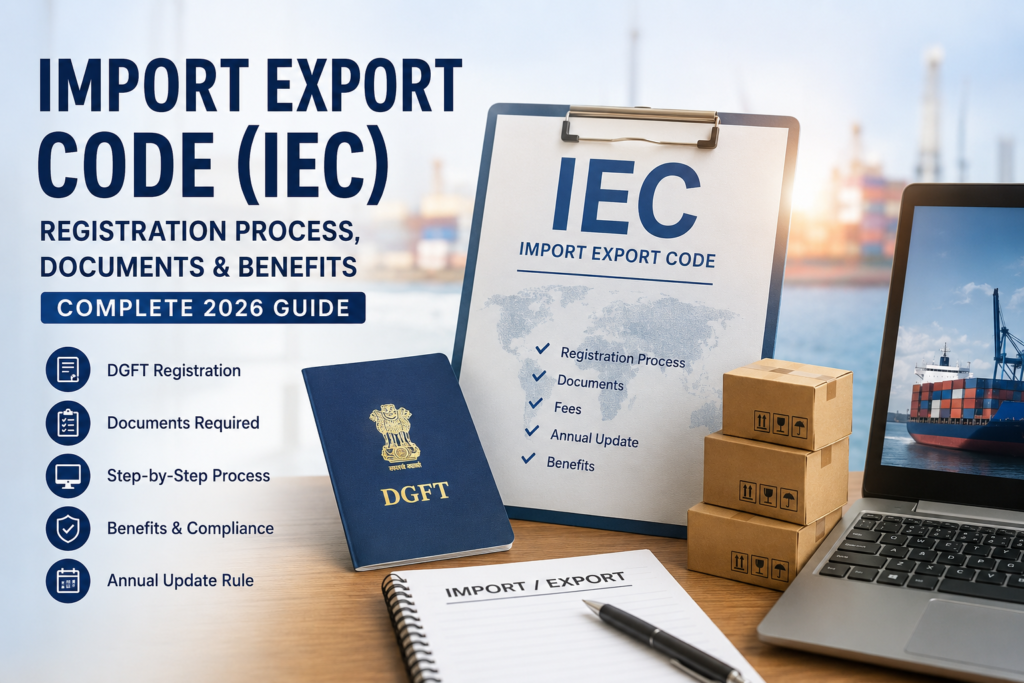
The Import Export Code (IEC) is a unique identification number issued by the Directorate General of Foreign Trade (DGFT) to businesses and other eligible entities involved in international trade.
For most import and export activities involving goods, having an IEC is mandatory unless the activity falls under an exemption specified under the Foreign Trade Policy and applicable procedures. DGFT states that the IEC is aligned with the entity’s PAN and is issued through an online application process.
An IEC is therefore one of the first compliance requirements businesses should consider before starting commercial import or export activities from India.
However, obtaining an IEC is only the beginning. Businesses must also ensure that their IEC details remain updated and that their import-export transactions are properly handled from a customs, banking, GST and FEMA compliance perspective.
Who Needs an IEC in India?
Businesses planning to import or export goods generally need an IEC. This can include:
- Proprietorship firms
- Partnership firms
- Limited Liability Partnerships (LLPs)
- Private limited companies
- Public limited companies
- Other eligible business entities
There are specific exempt categories under the Foreign Trade Policy and Handbook of Procedures. Therefore, businesses should verify whether their particular activity falls within an exemption before applying.
For service exporters, the requirement can depend on the nature of the transaction and whether the exporter intends to claim benefits under the Foreign Trade Policy. DGFT specifically provides that IEC may be necessary for export of services or technology when benefits under the Foreign Trade Policy are being claimed.
IEC Registration Documents Required in 2026
The IEC registration process is online, but the information submitted must accurately match the applicant’s official records.
Depending on the applicant type and DGFT requirements applicable at the time of filing, information or supporting documents may include:
1. PAN Details
The applicant’s PAN is a fundamental part of the IEC application because the IEC is linked to the PAN of the entity.
2. Address and Entity Details
The applicant needs to provide details relating to the principal place of business and other required entity information.
3. Bank Account Details
Correct bank account information is important because the IEC profile is connected with the business’s international trade and banking activities.
4. Entity Constitution Details
Depending on the applicant type, relevant constitution details may be required, such as incorporation or partnership information.
5. Digital Authentication
The application may require Aadhaar-based authentication or DSC-based authentication, depending on the applicant and the applicable DGFT process.
Important: The exact document and authentication requirements can change. Applicants should verify the current requirements displayed on the DGFT portal before submitting an application.
IEC Registration Process: Step-by-Step
The IEC registration process is completed online through the DGFT portal.
Step 1: Visit the DGFT Portal
Create or access your account through the official DGFT website.
Step 2: Complete User Registration
Provide the required email address, mobile number and other registration details.
Step 3: Access IEC Services
After logging in, access the IEC-related services available through the DGFT portal.
Step 4: Enter Applicant Details
Provide the required information relating to:
- Applicant/entity
- PAN
- Business address
- Contact information
- Bank details
- Other required profile information
Step 5: Complete Authentication
Complete the applicable Aadhaar OTP or DSC authentication process.
Step 6: Pay the Applicable Government Fee
Pay the applicable DGFT fee through the online payment facility.
Step 7: Submit the Application
Review all information carefully before submitting the application.
Step 8: Download the IEC
Once the IEC is issued, the applicant can access the IEC details electronically through the DGFT system.
The DGFT currently provides dedicated online services for IEC profile management, including modification and other IEC-related functions.
What Is the IEC Registration Fee?
IEC registration involves a government application fee. Because DGFT fees and procedures can be revised, applicants should verify the current fee displayed on the official DGFT portal before making payment.
Avoid relying on outdated third-party articles that quote historical fees without checking the current DGFT system.
Does an IEC Expire?
An IEC does not work like a short-term licence that needs to be renewed every year.
Instead, DGFT requires IEC holders to electronically update or confirm their IEC details every year during the April-June period, even when there are no changes.
If the required annual updation is not completed, the IEC can be deactivated. DGFT states that a deactivated IEC may be activated after successful updation, subject to applicable requirements.
Why Is IEC Annual Updation Important?
Businesses should review their IEC profile for changes such as:
- Business address
- Bank account information
- Contact details
- Entity information
- Branch information
- Other profile details
Even when there are no changes, the required online confirmation should not be ignored.
What Happens If IEC Details Are Not Updated?
Failure to complete the required annual updation can result in IEC deactivation.
This can create practical difficulties for businesses involved in international trade, particularly where an active IEC is required for import or export transactions.
Businesses should therefore treat IEC annual updation as an important part of their yearly compliance calendar rather than waiting until an international transaction is delayed.
Key Benefits of an Active IEC
An active IEC provides the basic regulatory identification required for most commercial import and export activities.
1. Supports Import and Export Activities
For most import and export of goods, an IEC is mandatory unless an exemption applies.
2. Supports Customs Processes
IEC information forms part of the broader documentation and compliance framework used for international trade.
3. Helps With Banking and Foreign Exchange Transactions
Import and export transactions often involve authorised dealer banks and foreign-exchange documentation. Maintaining accurate IEC and transaction records helps businesses coordinate their trade and banking compliance.
4. Supports Export-Related Benefits
Where applicable, an IEC is important for accessing benefits and authorisations available under the Foreign Trade Policy.
5. Supports Trade Compliance
IEC is one component of a wider compliance framework involving DGFT, Customs, GST, banks and RBI-related foreign exchange requirements.
IEC and FEMA Compliance: What Is the Connection?
An IEC itself is not the entire FEMA compliance framework.
When an Indian business imports or exports, the transaction can involve foreign exchange payments or receipts. This brings banking and foreign-exchange compliance considerations into the picture.
For example, exporters may need to ensure that export proceeds are properly received and reconciled through the banking system. Importers may need to maintain appropriate records relating to payments and import documentation.
RBI’s monitoring framework and authorised dealer banks play an important role in the handling and monitoring of export and import transactions.
Therefore, obtaining an IEC should be viewed as the starting point of import-export compliance, not the final compliance requirement.
IEC, EDPMS and IDPMS
Businesses involved in international trade may also encounter banking and RBI monitoring systems.
EDPMS is associated with monitoring export transactions, while IDPMS is associated with import transactions.
Issues such as outstanding export proceeds, discrepancies in documents, delayed submission of information or mismatches between transaction records can create compliance and banking challenges.
This is why businesses should maintain proper coordination between their:
- DGFT records
- Customs documentation
- GST records
- Bank records
- Import/export invoices
- Shipping and import documents
- Foreign exchange transaction records
Common IEC Registration Mistakes
Several avoidable mistakes can delay IEC processing or create problems later.
PAN and Entity Details Do Not Match
Information submitted in the IEC application should accurately correspond with the entity’s official records.
Incorrect Bank Information
Incorrect or outdated bank details can create unnecessary issues during subsequent trade and banking processes.
Poor-Quality Supporting Documents
Where supporting documents are required, ensure that they are clear, valid and uploaded according to the portal’s requirements.
Incorrect Applicant Type
Selecting the wrong entity or constitution type can lead to problems with the application or subsequent modifications.
Ignoring IEC Annual Updation
This is one of the most important post-registration mistakes. DGFT requires annual electronic updation during April-June.
Treating IEC as the Only Compliance Requirement
An IEC does not automatically make an import-export transaction fully compliant. Depending on the transaction, additional DGFT, Customs, GST, banking and FEMA requirements may apply.
How a FEMA Consultant Can Help With IEC and Trade Compliance
IEC registration may appear straightforward, but international trade compliance can become complicated once transactions begin.
A FEMA consultant can help businesses understand the compliance requirements connected with cross-border transactions, including:
- IEC registration and profile review
- IEC annual updation
- Import-export documentation
- Banking coordination
- FEMA compliance
- Export proceeds and transaction reconciliation
- Foreign exchange documentation
- EDPMS-related matters
- IDPMS-related matters
- FDI and ODI compliance where applicable
- ECB and other cross-border transactions where applicable
For businesses regularly dealing with overseas customers, suppliers, investors or group entities, professional compliance support can help reduce avoidable documentation and regulatory issues.
Frequently Asked Questions About IEC Registration
Is IEC mandatory for every business?
No. IEC is generally required for import and export of goods, but specific exemptions exist under the applicable Foreign Trade Policy and procedures.
How can I apply for IEC registration?
IEC applications are submitted online through the DGFT portal. The applicant needs to provide the required entity, PAN, bank and other information and complete the applicable authentication process.
Is IEC the same as PAN?
The IEC is aligned with the entity’s PAN. DGFT states that the IEC is the same as the PAN for the entity and is separately issued by DGFT.
Does IEC need to be renewed every year?
The IEC itself does not operate as an annually expiring registration. However, IEC holders must complete the required annual electronic updation or confirmation during April-June.
What happens if I do not update my IEC?
DGFT may deactivate an IEC if the required annual updation is not completed. The IEC can subsequently be activated after successful updation, subject to applicable requirements.
Can a business modify its IEC details?
Yes. DGFT provides online IEC profile modification services. Businesses should update relevant details when changes occur and follow the applicable DGFT process.
Is GST registration mandatory for IEC?
IEC and GST registration are separate regulatory requirements. Whether GST registration is required depends on the nature and circumstances of the business and its transactions.
Does having an IEC mean that my business is FEMA compliant?
No. IEC is only one part of the broader import-export compliance framework. Depending on the transaction, FEMA, RBI, banking, GST, Customs and DGFT requirements may also apply.
Final Takeaway
The Import Export Code (IEC) is a fundamental requirement for most businesses undertaking commercial import or export activities from India.
But obtaining an IEC is only the first step. Businesses must also maintain accurate IEC information, complete the required annual updation, maintain proper import-export documentation and ensure that their banking, GST and foreign-exchange transactions comply with applicable regulations.
For businesses dealing with cross-border transactions, professional guidance can help connect IEC requirements with the wider FEMA and trade compliance framework.
Need help with IEC registration or FEMA compliance?
Femabide Advisorz provides support for IEC registration, IEC annual updation, FEMA advisory, FDI compliance, ODI compliance and ECB-related matters. Get professional assistance to manage your cross-border compliance requirements with greater clarity and fewer avoidable delays.
Official DGFT Reference
For the latest IEC application, updation and procedural requirements, always verify the information on the official DGFT portal.