RBI Compounding FEMA Violations India: Complete Process Explained
The RBI compounding FEMA violations India framework provides businesses, startups, and individuals with a legal mechanism to regularise FEMA contraventions before they escalate into prolonged Enforcement Directorate proceedings.
If your company has delayed FC-GPR filings, reporting lapses, valuation errors, or foreign exchange compliance gaps, the RBI compounding process may allow you to settle the violation through a prescribed penalty and obtain a clean compliance record.
At FEMABIDE Advisorz, we regularly assist companies with FEMA reviews, RBI compounding applications, and FEMA regularisation strategies across India.
This guide explains the complete FEMA compounding process, penalty framework, and real case studies that demonstrate how Indian businesses have successfully regularised FEMA violations.
What Is RBI Compounding Under FEMA?
Under Section 15 of FEMA and the Compounding Proceedings Rules, RBI compounding allows a person or company to voluntarily admit a FEMA contravention and seek legal regularisation.
Once the contravention is compounded:
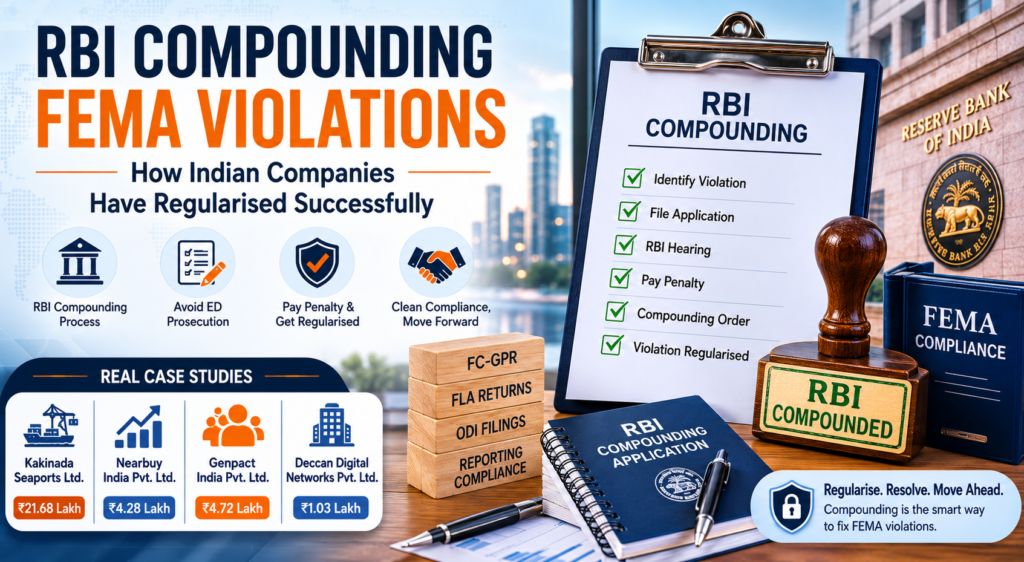
- A compounding order is issued
- The specified penalty is paid
- The violation is considered settled
- Prosecution risk for that contravention generally ends
The RBI compounding FEMA violations India process is intended to encourage voluntary compliance and reduce prolonged enforcement litigation.
Who Handles FEMA Compounding: RBI or ED?
Under the RBI compounding application FEMA framework:
- RBI handles most routine FEMA contraventions
- ED handles specified serious violations and money laundering-related matters
Routine contraventions commonly handled by RBI include:
- Delayed FC-GPR filings
- Late inward remittance reporting
- Delayed allotment of shares
- Reporting errors
- Technical FEMA non-compliance
This makes early action extremely important because once a final adjudication order is passed, compounding may no longer remain available.
FEMA Compounding Process: Step-by-Step
Step 1: Identify the FEMA Contravention
The first step in the FEMA compounding process is identifying:
- Which FEMA regulation was violated
- The amount involved
- Duration of the contravention
- Reporting gaps
- Transaction structure issues
This requires a detailed FEMA review by an experienced advisor.
Step 2: Prepare the RBI Compounding Application
The compounding application must include:
- Facts of the contravention
- FEMA provisions violated
- Transaction details
- Supporting documentation
- Mitigating circumstances
- Corrective steps taken
A weak or incomplete filing can delay the process significantly.
Step 3: RBI Examination and Hearing
The RBI may:
- Seek additional documents
- Request clarifications
- Conduct a hearing
- Evaluate mitigating factors
At FEMABIDE Advisorz, we represent companies during RBI hearings and assist with responses throughout the compounding process.
Step 4: Compounding Order and Penalty Payment
Once RBI completes the review, it issues a compounding order specifying the penalty amount.
After payment:
- The contravention is regularised
- Proceedings conclude
- Compliance status is restored
How RBI Calculates FEMA Penalties
Under the compounding of contraventions FEMA framework, RBI evaluates:
- Amount involved
- Duration of delay
- Nature of contravention
- Voluntary disclosure
- Previous violations
- Cooperation level
- Intent behind the contravention
The RBI generally differentiates between:
- Procedural violations
- Deliberate FEMA violations
This distinction significantly affects the final FEMA penalty RBI amount.
Real RBI Compounding Case Studies
Case Study 1: Kakinada Seaports Limited
Key Contraventions
- Late reporting of inward remittance
- Delayed FC-GPR filing
- Delay in share allotment
Transaction Value
Over Rs. 53 crore
Compounding Amount
Rs. 21.68 lakh
Key Learning
The investment itself was compliant, but reporting timelines were missed. The proactive RBI compounding FEMA violations India application helped the company regularise the issue before prolonged adjudication.
Case Study 2: Nearbuy India Private Limited
Key Contraventions
- Delayed FC-GPR filing
- Late inward remittance reporting
Transaction Value
Over Rs. 108 crore
Compounding Amount
Rs. 4.28 lakh
Key Learning
The Nearbuy case demonstrates that procedural FEMA lapses generally receive proportionate penalties when voluntarily regularised through compounding.
Case Study 3: Genpact India Private Limited
Key Contraventions
- Historical reporting delays
- FC-GPR filing delays
Important Insight
The matter remained unresolved for over seven years before compounding regularised the violation.
Key Learning
The how to regularise FEMA violation strategy remains available even for historical contraventions if adjudication has not concluded.
Case Study 4: Deccan Digital Networks Private Limited
Key Contraventions
- Late inward remittance reporting
- Delayed FC-GPR filing
Timeline
Proceedings remained pending for approximately 13 years.
Compounding Amount
Rs. 1.03 lakh
Key Learning
This case strongly demonstrates why companies should not delay FEMA regularisation. Long-term litigation often costs far more than the eventual compounding amount.
Why Companies Should Not Ignore FEMA Violations
Many companies mistakenly believe small reporting delays are harmless.
However, delayed FEMA compliance may lead to:
- ED show cause notices
- Regulatory scrutiny
- Fundraising complications
- Due diligence concerns
- Director liability exposure
- Cross-border transaction restrictions
Proper FEMA compliance for companies is especially important for startups, foreign-funded entities, and businesses handling overseas transactions.
When Should You File a Compounding Application?
You should immediately review compounding if your business has:
- Delayed FC-GPR filings
- Missing FLA returns
- Incorrect FEMA reporting
- Delayed allotment of shares
- ODI reporting failures
- Foreign investment structuring issues
- Historical FEMA compliance gaps
The earlier the issue is identified, the stronger the mitigation factors available before RBI.
How FEMABIDE Advisorz Helps
FEMABIDE Advisorz provides complete support for:
- FEMA compliance audits
- RBI compounding applications
- FEMA regularisation strategy
- RBI hearings
- FC-GPR and FLA review
- ODI compliance
- FEMA litigation support
We help companies identify violations early and resolve them proactively before ED proceedings escalate.
FAQs on RBI Compounding of FEMA Violations
What is RBI compounding under FEMA?
RBI compounding is a legal process allowing companies and individuals to voluntarily regularise FEMA contraventions by paying a prescribed penalty.
What types of FEMA violations can be compounded?
Most procedural FEMA violations such as delayed FC-GPR filing, inward remittance reporting delays, and reporting errors may be compounded.
Who handles FEMA compounding — RBI or ED?
RBI handles most routine FEMA contraventions, while ED handles serious specified violations and money laundering matters.
What happens after a compounding order is issued?
Once the penalty is paid, the contravention is considered settled and prosecution risk for that specific violation generally ends.
Can old FEMA violations still be compounded?
Yes. Historical violations may still be compounded if final adjudication has not concluded.
How is FEMA compounding penalty calculated?
RBI considers the transaction amount, delay period, intent, cooperation level, and whether the contravention was procedural or deliberate.
Why should businesses act early?
Voluntary disclosure and early regularisation are significant mitigating factors under the RBI compounding framework.
How can FEMABIDE Advisorz help?
FEMABIDE Advisorz assists companies with FEMA audits, RBI compounding applications, regulatory representation, and FEMA compliance advisory.