Chemical manufacturing is one of the more import-intensive sectors in India. Companies regularly import raw materials, intermediates, catalysts, specialty chemicals and other inputs from overseas suppliers. These transactions create significant foreign exchange exposure and make FEMA compliance for chemical manufacturers an important part of financial and operational risk management.
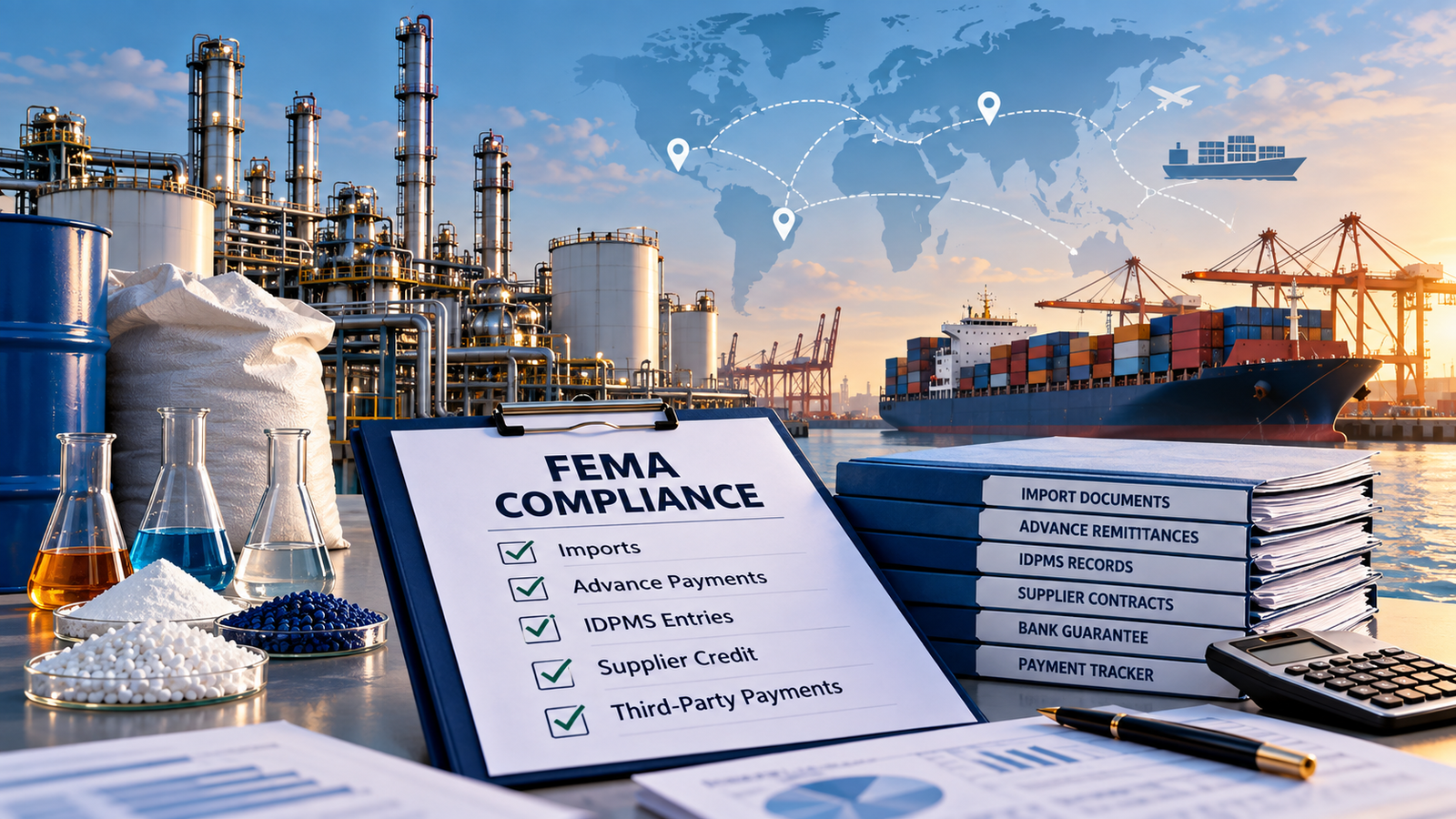
High-value imports, advance payments to overseas suppliers, supplier credit, third-party payments and unresolved IDPMS entries can create compliance concerns when they are not properly documented or monitored. RBI’s framework places specific responsibilities on importers and their Authorised Dealer (AD) banks concerning import documentation, advance remittances and IDPMS procedures.
For chemical manufacturers handling frequent shipments and large-value procurement contracts, FEMA compliance should therefore be treated as an ongoing process rather than routine paperwork.
Why FEMA Compliance Is Critical for Chemical Manufacturers
Chemical companies often deal with complex international procurement arrangements, including:
- High-value and recurring imports of raw materials and intermediates
- Advance payments to overseas suppliers
- Supplier credit and deferred payment arrangements
- Multiple shipments against a single purchase order
- Quality disputes or shipment delays
- Third-party or related-party payment arrangements
- Large volumes of import documentation
Each transaction requires appropriate documentation and monitoring. When import records remain unresolved or supporting documents are incomplete, companies may face questions from their AD bank or additional regulatory scrutiny.
For businesses with significant overseas procurement, maintaining a systematic approach to FEMA compliance for imports can help reduce the risk of unresolved transactions and documentation gaps.
Key FEMA Compliance Challenges for Chemical Manufacturers
1. Advance Remittances Without Proper Documentation
Chemical manufacturers may make advance payments to overseas suppliers to secure raw materials, intermediates or specialty chemicals. Advance payments can be commercially useful, particularly when suppliers require upfront payment or when companies want to secure supply and pricing.
However, high-value advance remittances require careful attention to the applicable FEMA and RBI requirements.
For advances exceeding USD 200,000, the RBI framework generally provides for an unconditional and irrevocable standby letter of credit or guarantee, subject to applicable conditions and exceptions and the AD bank’s assessment.
Companies should therefore confirm the applicable requirements with their AD bank before making substantial advance payments.
They should also maintain a clear documentary trail connecting the:
- Purchase order or contract
- Supplier invoice
- Advance remittance
- Bank transaction
- Shipping documents
- Bill of Entry
- Final payment or adjustment
An advance that remains unadjusted against the related import can become a compliance issue if it is not properly monitored and regularised.
2. Open IDPMS Entries
The Import Data Processing and Monitoring System (IDPMS) plays an important role in monitoring import transactions.
Chemical companies with a high volume of imports may accumulate open IDPMS entries because of:
- Delayed shipping documents
- Partial shipments
- Differences between invoices and Bills of Entry
- Quality disputes
- Shipment cancellations or delays
- Incorrect mapping of payments
- Third-party payment arrangements
- Delays in submitting documents to the AD bank
Open entries should not simply be allowed to accumulate.
Companies should periodically reconcile purchase orders, supplier invoices, advance remittances, Outward Remittance Messages (ORMs), Bills of Entry and other relevant documentation.
Maintaining a live IDPMS compliance tracker can help finance and compliance teams identify ageing transactions and assign responsibility for closure.
3. Supplier Credit and Deferred Payment Arrangements
Overseas suppliers may offer credit terms to chemical manufacturers, particularly for recurring or high-value procurement.
Although extended payment terms can provide working-capital advantages, companies should not treat supplier credit as purely a commercial arrangement. The foreign exchange implications and applicable FEMA requirements should also be reviewed.
Before entering into long-duration supplier-credit arrangements, companies should evaluate:
- The agreed credit period
- Applicable RBI/FEMA requirements
- Contractual payment terms
- Import documentation
- Bank reporting requirements
- Any required approvals or regularisation
A transaction that is commercially acceptable may still require additional foreign exchange compliance steps.
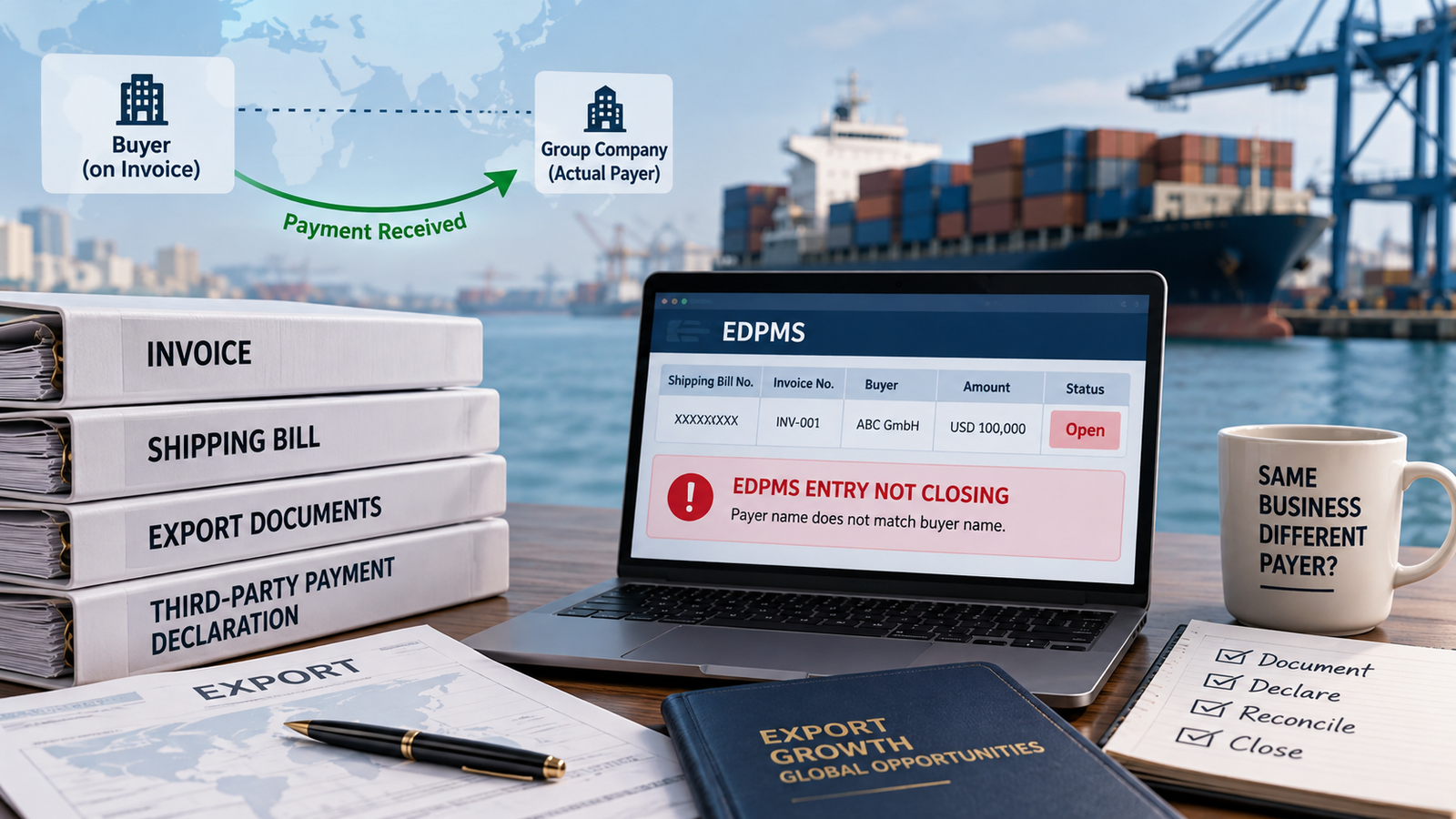
4. Third-Party Payments in Import Transactions
Third-party payments can arise when an importer makes payment to an entity other than the overseas supplier named on the invoice.
For example, payment may be routed through a group company, financing entity or another authorised party.
Such arrangements require careful documentation. RBI permits certain third-party payments for imports subject to prescribed conditions, including appropriate documentation and the AD bank being satisfied about the bona fides of the transaction.
Chemical manufacturers should therefore identify third-party payment arrangements before making the remittance.
Relevant documents may include:
- Purchase order
- Commercial invoice
- Agreement or tripartite arrangement, where applicable
- Details of the actual supplier
- Details of the payment recipient
- Bill of Entry
- Bank correspondence
Trying to resolve missing documentation after the payment has already been made can make the process more complicated.
5. Managing High-Value Import Documentation
High-value imports require stronger documentation controls because even a small mismatch can create difficulties during reconciliation.
Companies should ensure that key transaction details are consistent across:
- Purchase contracts
- Purchase orders
- Invoices
- Shipping documents
- Bills of Entry
- Bank remittance records
- IDPMS records
Differences in supplier names, invoice numbers, amounts, currencies or payment references should be investigated and resolved promptly.
For chemical manufacturers managing hundreds of import transactions, a centralised reconciliation process can significantly improve visibility.
FEMA Compliance Checklist for Chemical Manufacturers
A practical FEMA compliance checklist for chemical manufacturers should include:
- Review outstanding IDPMS entries regularly.
- Reconcile advance remittances with Bills of Entry and import documents.
- Check applicable requirements before making high-value advance payments.
- Monitor supplier-credit and deferred-payment arrangements.
- Document third-party payment arrangements before making remittances.
- Maintain purchase orders, contracts, invoices and customs documents together.
- Track all open import transactions with responsible owners and due dates.
- Coordinate regularly with the company’s AD bank.
- Investigate unresolved transactions rather than allowing them to age.
- Conduct periodic reviews of high-value import transactions.
This approach can help finance teams identify potential issues before they become larger compliance problems.
How an IDPMS Review Can Help
An IDPMS compliance review can provide chemical manufacturers with a clearer picture of their outstanding import transactions.
The review can focus on:
- Identifying open IDPMS entries.
- Matching remittances with Bills of Entry.
- Reviewing outstanding advance payments.
- Checking supplier-credit arrangements.
- Identifying third-party payment transactions.
- Reviewing missing or inconsistent documentation.
- Categorising transactions according to their compliance status.
- Creating an action plan for unresolved entries.
Instead of waiting for a bank query or regulatory communication, companies can use periodic internal reviews to identify gaps proactively.
The Cost of Delayed FEMA Compliance
Import-related FEMA issues may not always create an immediate operational problem. The concern often becomes visible later during:
- Bank inspections
- Financing or loan renewals
- Investor due diligence
- Internal audits
- Statutory reviews
- Corporate transactions
- Regulatory enquiries
By that stage, older transactions may require additional documentation, explanations or regularisation.
For chemical manufacturers with continuous overseas procurement, proactive FEMA compliance for chemical manufacturers is generally more efficient than dealing with accumulated issues after they become urgent.
Practical Steps Chemical Companies Should Take
A strong import-side FEMA compliance process should combine finance, procurement, logistics and banking teams.
Chemical manufacturers should consider establishing:
A Centralised Import Tracker
Track every major import transaction from purchase order through payment and Bill of Entry closure.
Advance Payment Monitoring
Maintain a separate tracker for advance remittances and their corresponding import documents.
IDPMS Reconciliation
Review open entries periodically and identify transactions approaching or exceeding their applicable timelines.
Documentation Controls
Create standard documentation requirements for high-value imports, supplier credit and third-party payments.
Bank Coordination
Maintain regular communication with the AD bank where clarification or additional documentation is required.
Periodic FEMA Reviews
Conduct periodic reviews of high-value and unusual import transactions instead of waiting for an external query.
Need Clarity on Your Import-Side FEMA Compliance?
Chemical manufacturers dealing with frequent overseas procurement should not wait for an unresolved IDPMS entry, bank query or regulatory communication before reviewing their import transactions.
A focused FEMA review can help identify documentation gaps, unresolved import entries, advance-remittance issues, supplier-credit concerns and third-party payment risks at an earlier stage.
FEMABIDE ADVISORZ specialises in practical FEMA compliance support for manufacturing and chemical companies, helping businesses understand and manage foreign exchange compliance requirements related to their cross-border transactions.
Call: +91 99333 85556
Website: https://www.femabide.com