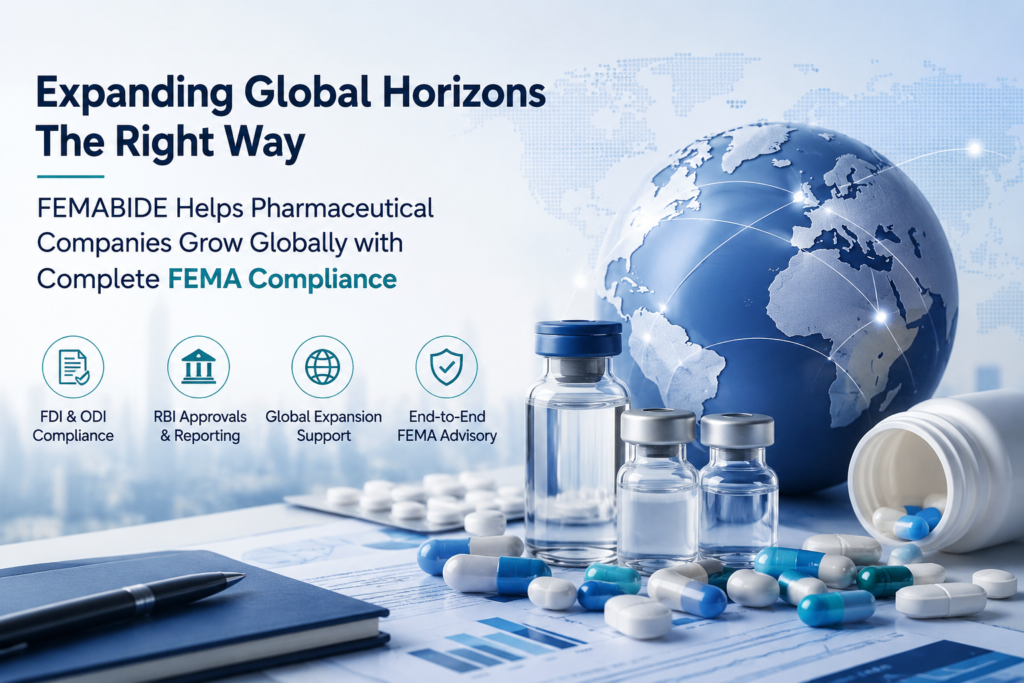
India’s pharmaceutical industry is expanding rapidly, with companies attracting foreign investment, entering international markets, acquiring overseas businesses, and establishing global operations.
However, international expansion also brings complex regulatory requirements. Transactions involving foreign investment, overseas subsidiaries, cross-border funding, and foreign exchange must comply with the Foreign Exchange Management Act (FEMA) and applicable RBI regulations.
This is where FEMA compliance for pharmaceutical companies becomes an important part of business planning.
FEMABIDE Advisorz helps pharmaceutical companies manage FEMA and RBI requirements while structuring and executing cross-border transactions.
India’s Pharmaceutical Industry Is Expanding Globally
India has developed into one of the world’s major pharmaceutical manufacturing and export hubs. Pharmaceutical businesses are increasingly exploring opportunities beyond the domestic market through:
- Foreign Direct Investment (FDI)
- Private Equity (PE)
- Venture Capital (VC)
- Overseas Joint Ventures
- International acquisitions
- Overseas subsidiaries
- Cross-border strategic partnerships
- Global manufacturing and R&D operations
These opportunities can create significant growth potential. At the same time, they may involve complex FEMA, RBI reporting, valuation, foreign-exchange and documentation requirements.
Companies therefore need to consider regulatory compliance from the beginning of a transaction rather than treating it as an afterthought.
Pharmaceutical Funding and Global Expansion
The pharmaceutical sector continues to receive funding from domestic and international investors, supported by private capital, government initiatives and increasing demand for Indian pharmaceutical products.
Funding and expansion may involve multiple sources, including:
- Foreign investors
- Private equity funds
- Venture capital investors
- Strategic investors
- Overseas lenders
- Government-linked incentives and schemes
Note: Funding composition varies by company and transaction. Any industry-level funding chart should be treated as illustrative unless based on an official dataset.
As funding structures become more sophisticated, pharmaceutical businesses need to evaluate the FEMA implications of each transaction.
Why Pharmaceutical Companies Need FEMA Experts
FEMA applies to various transactions involving foreign exchange and cross-border movement of funds.
For pharmaceutical companies, this can become relevant when they:
- Receive foreign investment
- Issue shares to overseas investors
- Establish foreign subsidiaries
- Acquire businesses outside India
- Raise funds from overseas lenders
- Transfer funds across borders
- Repatriate foreign investment
- Enter into international business structures
Incorrect documentation, reporting or transaction structuring can create regulatory complications, including delays, notices, additional compliance requirements and potential penalties.
Professional FEMA advisory for pharmaceutical companies can help businesses identify regulatory requirements before completing a transaction.
How FEMABIDE Supports Pharmaceutical Companies
FEMABIDE provides FEMA and RBI advisory support for pharmaceutical businesses involved in domestic and international transactions.
1. Foreign Direct Investment (FDI) Compliance
Pharmaceutical companies raising capital from overseas investors may need to comply with FEMA provisions, applicable sectoral rules and RBI reporting requirements.
FEMABIDE assists with:
- Foreign investment structuring
- Equity issuance compliance
- FEMA documentation
- RBI reporting
- FC-GPR-related compliance
- Foreign investment documentation
The objective is to help businesses structure foreign investment transactions correctly from the beginning.
2. Overseas Direct Investment (ODI)
Global expansion may require an Indian pharmaceutical company to establish a subsidiary, acquire an overseas business or invest in a foreign entity.
Examples include:
- Setting up overseas subsidiaries
- Acquiring foreign pharmaceutical businesses
- Establishing international R&D operations
- Creating overseas manufacturing facilities
- Investing in international joint ventures
FEMABIDE assists companies with the applicable ODI compliance, documentation and regulatory requirements.
3. RBI Approvals and Regulatory Support
Some cross-border transactions may require regulatory approvals or specific compliance procedures.
FEMABIDE can support pharmaceutical companies with:
- Documentation preparation
- Regulatory applications
- FEMA-related assessments
- RBI correspondence
- Transaction-specific compliance support
The exact approval requirements depend on the structure and nature of the proposed transaction.
4. External Commercial Borrowings (ECB)
International expansion may require pharmaceutical companies to access overseas debt financing.
FEMABIDE helps businesses evaluate and manage areas such as:
- ECB eligibility
- Financing structure
- Applicable FEMA requirements
- Documentation
- Reporting obligations
- Ongoing compliance
Proper planning can help companies avoid regulatory complications after receiving overseas funding.
5. Cross-Border Mergers and Acquisitions
International mergers and acquisitions can involve multiple regulatory considerations.
A pharmaceutical company acquiring an overseas business may need to evaluate:
- ODI regulations
- Funding structure
- Valuation requirements
- Foreign-exchange considerations
- Regulatory reporting
- Repatriation requirements
FEMABIDE supports businesses in assessing FEMA implications and coordinating compliance requirements throughout the transaction.
6. Share Valuation and Pricing Compliance
Foreign investment transactions can involve specific valuation and pricing requirements under applicable regulations.
FEMABIDE assists businesses with:
- Transaction structuring
- Valuation coordination
- Pricing compliance
- Supporting documentation
- Regulatory reporting
Proper valuation and documentation can help reduce avoidable compliance issues during foreign investment transactions.
7. Ongoing FEMA Compliance
FEMA compliance should not end once a transaction is completed.
Pharmaceutical companies operating internationally may have continuing reporting and documentation obligations.
FEMABIDE provides ongoing support to help businesses manage their FEMA requirements as they:
- Raise additional foreign capital
- Expand overseas
- Restructure investments
- Acquire international businesses
- Repatriate funds
- Modify their cross-border structures
This allows businesses to incorporate regulatory compliance into their long-term expansion strategy.
Why Pharmaceutical Companies Choose FEMABIDE
FEMABIDE combines FEMA and RBI regulatory knowledge with practical transaction support.
Businesses can access support for:
- FDI compliance
- ODI compliance
- FEMA advisory
- RBI-related matters
- ECB compliance
- Cross-border transactions
- Foreign investment structuring
- Valuation and pricing requirements
- Ongoing FEMA compliance
The goal is not simply to meet regulatory requirements. Effective compliance planning can help pharmaceutical companies execute international transactions with greater clarity and reduce avoidable regulatory risks.
Global Expansion Requires More Than Capital
For pharmaceutical companies, international expansion involves more than finding investors or identifying overseas markets.
Businesses also need to consider how funds will enter India, how investments will be structured, how overseas entities will be established, and what reporting obligations will apply.
Integrating FEMA compliance for pharmaceutical companies into the transaction planning process can help businesses identify regulatory requirements before they become obstacles.
With the right advisory support, pharmaceutical companies can focus on research, manufacturing, innovation and international growth while managing their FEMA and RBI obligations effectively.
Frequently Asked Questions
1. What is FEMA compliance for pharmaceutical companies?
FEMA compliance refers to following applicable foreign-exchange laws, RBI regulations, reporting requirements and transaction rules when a pharmaceutical company undertakes eligible cross-border transactions.
2. Do pharmaceutical companies need FEMA compliance for foreign investment?
Yes, foreign investment transactions involving Indian pharmaceutical companies may be subject to FEMA, RBI and applicable investment-related regulations. The exact requirements depend on the transaction and investment structure.
3. What FEMA support does FEMABIDE provide to pharma companies?
FEMABIDE provides support related to FDI, ODI, ECB, RBI matters, cross-border transactions, valuation, reporting and ongoing FEMA compliance.
4. Can FEMABIDE help pharmaceutical companies establish overseas subsidiaries?
Yes. FEMABIDE can assist pharmaceutical businesses in evaluating and managing the FEMA and ODI compliance requirements associated with establishing or investing in overseas entities.
5. What is ODI compliance for pharmaceutical companies?
ODI compliance relates to the regulatory requirements applicable when an Indian entity makes an overseas investment, such as investing in or establishing a foreign subsidiary or joint venture.
6. Can FEMABIDE help with overseas acquisitions?
Yes. FEMABIDE can provide FEMA-related advisory support for cross-border acquisitions, including transaction structuring, regulatory considerations, documentation and applicable reporting requirements.
7. Do pharmaceutical companies need RBI approval for every foreign transaction?
No. RBI approval requirements depend on the nature, structure and circumstances of the transaction. Some transactions may follow the applicable automatic route, while others may require specific regulatory approval.
8. Why is FEMA compliance important during global expansion?
FEMA compliance helps companies manage foreign-exchange transactions, investments, funding and reporting requirements in accordance with applicable regulations, reducing the risk of avoidable regulatory issues.
Conclusion
India’s pharmaceutical industry is increasingly becoming global, creating opportunities for international investment, overseas acquisitions and expansion.
At the same time, cross-border transactions can involve complex FEMA and RBI requirements.
Working with an experienced FEMA advisory firm for pharmaceutical companies can help businesses plan transactions properly, manage documentation and address regulatory requirements as they expand.
Planning foreign investment, overseas expansion or a cross-border pharmaceutical transaction? Contact FEMABIDE Advisorz for FEMA and RBI advisory support.