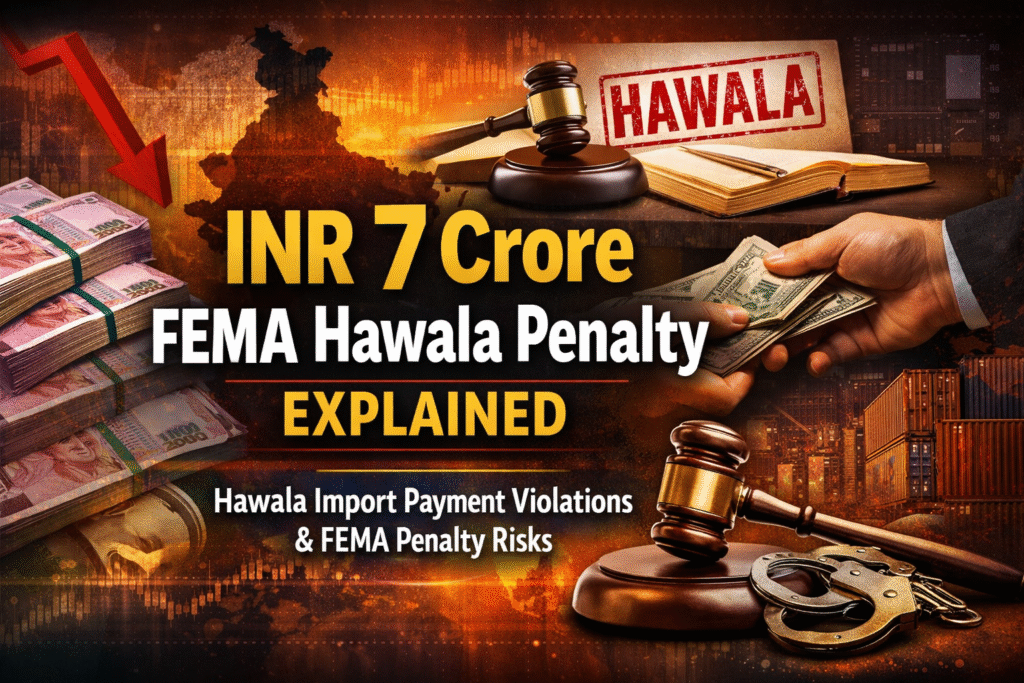
In a significant enforcement action under the Foreign Exchange Management Act, 1999 (FEMA), Indian regulators imposed a penalty of INR 7 crores for making payments against imports through hawala transactions. The case serves as a strong reminder that while trade may be global, compliance must remain fully within India’s regulatory framework.
Even where goods are genuinely imported, the method of payment plays a decisive role. FEMA does not only examine commercial substance — it strictly evaluates whether the foreign exchange transaction followed authorised channels and regulatory procedures.
What Triggered the INR 7 Crore FEMA Penalty?
Regulators found that:
- Import payments were not routed through Authorised Dealer (AD) banks
- Funds were transferred using hawala or informal value transfer systems
- Import settlement documentation was misrepresented
- RBI reporting requirements were bypassed
Despite the actual import of goods, the payment mechanism violated FEMA provisions. This reinforces a crucial principle: under FEMA, both transaction substance and procedural compliance are equally important.
Why Hawala Transactions Are a Serious FEMA Violation
Under FEMA and RBI regulations:
- All import payments must be routed through authorised banking channels
- Payments must match Bills of Entry, shipping documents, and RBI timelines
- Any unauthorised foreign exchange dealing is strictly prohibited
Hawala mechanisms bypass the formal banking system and regulatory oversight. Such transactions:
- Evade RBI supervision
- Create untraceable capital movement
- Raise concerns of money laundering and national security
Because of these risks, regulators treat hawala-based import payments as grave contraventions, even where businesses claim commercial intent.
Key FEMA Provisions Violated
In cases involving informal foreign exchange channels, regulators typically invoke:
- Section 3(a) – Prohibition on dealing in foreign exchange outside authorised channels
- Section 10 – Contravention of RBI directions
- FEMA (Current Account Transaction) Rules
- RBI Master Directions on Import of Goods and Services
Penalties under FEMA may extend to:
- Up to three times the amount involved, or
- INR 2 lakhs where the amount is not quantifiable
- Additional penalties for continuing contraventions
The INR 7 crore penalty reflects the scale, duration, and seriousness of the violation.
Common Compliance Myths That Lead to Violations
Many businesses mistakenly believe:
- “If goods are imported, payment mode doesn’t matter.”
- “Group companies can settle payments internally without documentation.”
- “Third-party payments don’t require RBI scrutiny.”
- “Hawala concerns fall only under money laundering laws, not FEMA.”
These assumptions often surface during enforcement proceedings — when corrective action is far more difficult and costly.
Why Importers in Andhra, Telangana & Bangalore Face Higher Scrutiny
In commercial hubs like Hyderabad, Bangalore, and Andhra Pradesh, regulators closely examine:
- Technology and electronics imports
- Engineering and infrastructure projects
- Pharma and bulk drug imports
- Cross-border group settlements
Rapidly expanding businesses sometimes prioritise speed and operational convenience over regulatory structure. This increases FEMA exposure and invites regulatory scrutiny.
How Regulators Detect Hawala-Based Import Payments
Contrary to earlier perceptions, informal transfer mechanisms are increasingly traceable due to:
- Banking transaction analytics
- Customs and RBI data reconciliation
- Foreign exchange audits
- Coordination between tax authorities and enforcement agencies
- Digital transaction trails and cross-border information sharing
Once detected, investigations often expand beyond FEMA into other regulatory domains, intensifying financial and reputational risk.
How the Best FEMA Consultants Prevent Such Exposure
Experienced FEMA advisors help businesses by:
- Structuring compliant import payment mechanisms
- Validating third-party and group entity settlements
- Ensuring RBI-aligned documentation
- Managing delayed payments, write-offs, and extensions
- Conducting proactive FEMA compliance audits
Preventive structuring is always more cost-effective than defending enforcement proceedings.
How Femabide Advisorz Supports Importers and Businesses
Femabide Advisorz provides comprehensive FEMA advisory services, including:
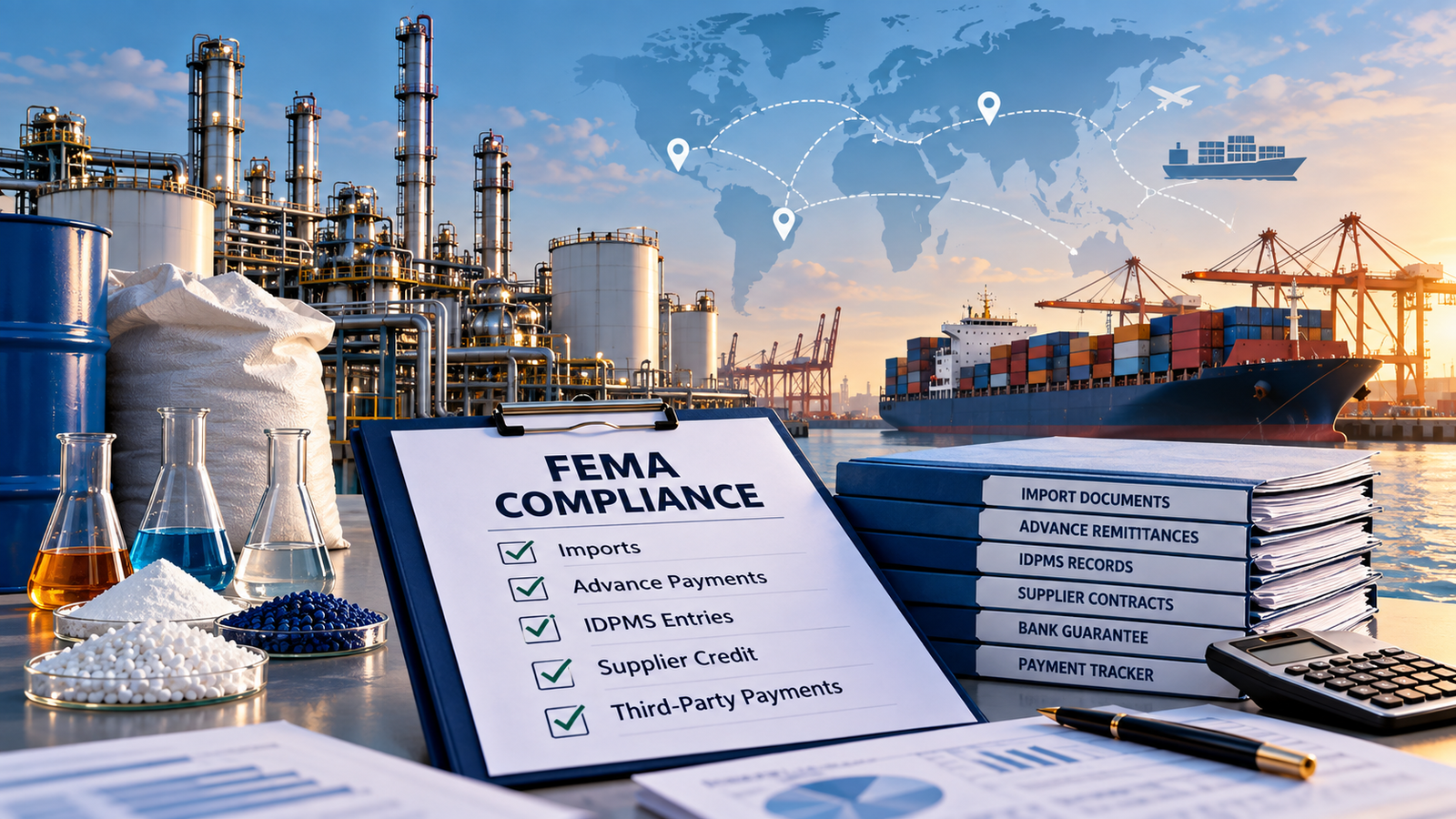
- Import payment compliance review
- RBI-approved settlement structuring
- FEMA risk audits and transaction assessments
- Assistance in handling RBI or Enforcement Directorate proceedings
- Regularisation of past contraventions
With strong expertise across Telangana, Andhra Pradesh, and Bangalore, the firm supports businesses in expanding globally while remaining fully compliant with FEMA regulations.
Under FEMA, How You Pay Matters as Much as What You Import
This INR 7 crore penalty underscores a fundamental regulatory principle:
FEMA focuses on process, transparency, and authorised foreign exchange channels.
Hawala-linked import payments invite severe penalties and multi-agency scrutiny.
For businesses engaged in cross-border trade, structured compliance is not optional — it is essential. Ensuring FEMA-compliant payment mechanisms today protects against regulatory exposure tomorrow.