Foreign Investment in India (FDI)

Foreign investment in India (FDI)

As foreign investment in India, including Foreign Direct Investment (FDI) and Foreign Portfolio Investment, continues to grow, regulatory clarity on ESOPs under FEMA and downstream investment is crucial for foreign entities operating in or with India.
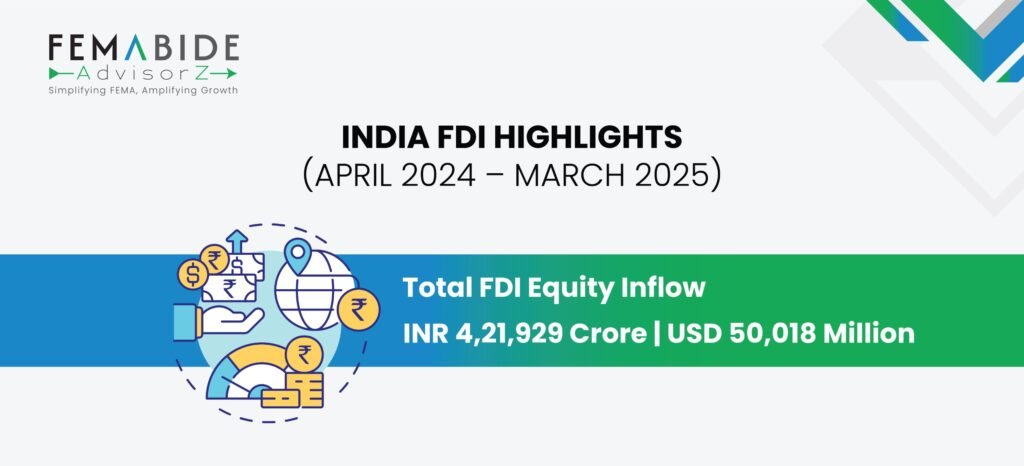
This guide helps you understand the applicable FEMA regulations, reporting obligations, and how to remain compliant while offering employee stock options or structuring layered investments. If a person resident outside India invests in the equity instruments of an Indian company or in the capital of a Limited Liability Partnership, then it is treated as a Foreign Investment in India. It includes Foreign Direct Investment (FDI) and Foreign Portfolio Investment in India.
Foreign Investment in India is governed by Foreign Exchange Management (Non-debt Instruments) Rules, 2019 and regulations as amended from time to time. Foreign investment is subject to entry routes and sectoral caps. Except for persons based in Pakistan and countries sharing land border with India, everyone is allowed to make Foreign Investment in India, subject to the entry routes and sectoral caps.

Relevant definitions

Foreign Investment is any investment made by a person resident outside India on a repatriable basis in:

  • Equity instruments of an Indian company
  • Capital of a Limited Liability Partnership (LLP)

FDI refers to investment by a person resident outside India:

  • In the equity instruments of an unlisted Indian company, or
  • In 10% or more of the post-issue paid-up equity capital (on a fully diluted basis) of a listed Indian company

Foreign Portfolio Investment is any investment made by a person resident outside India on a repatriable basis in less than 10% of the post-issue paid-up equity capital (on a fully diluted basis) of a listed Indian company.
FDI Prohibited Sectors in India

Certain sectors in India are strictly prohibited from receiving Foreign Direct Investment (FDI), ensuring national interest and regulatory oversight. These include lottery businesses, gambling, atomic energy, and real estate trading.

ESOP under FEMA – Issuing Stock Options Across Borders

What is ESOP FDI Compliance?

An ESOP (Employee Stock Option Plan) allows companies to offer equity-based compensation to their employees. When ESOPs involve foreign shareholders or foreign employees, it comes under FEMA and RBI regulation.

Key Compliance Areas:

  • ESOP FEMA Compliance is essential when issuing shares to:
    • Employees of a foreign subsidiary by an Indian parent company
    • Employees of a foreign holding company by an Indian subsidiary.
  • Must align with ESOP RBI Guidelines under  the Foreign Exchange Management (Non-Debt Instruments) Rules, 2019 as amended from time to time.
  • Proper disclosure and FEMA Inbound Regulations must be followed for ESOPs issued to non-residents.

Permitted Scenarios:

  • ESOP to foreign subsidiary employees by an Indian parent under the automatic route
  • ESOP to foreign holding employees by an Indian company if covered under employee benefit schemes

Common Regulatory Requirements:

  • Board and shareholder approval
  • Proper valuation of shares
  • Reporting to RBI through the Authorised Dealer Bank

Downstream Investment under FEMA – Structuring Indirect FDI

What is Downstream Investment?

Downstream investment refers to an Indian entity with foreign investment making further investment into another Indian entity. This is regulated as indirect foreign investment and governed by FEMA.

Downstream Investment Meaning in FDI:

When foreign-owned or controlled Indian companies invest into other Indian companies, it is treated as FDI investment in India under downstream investment FDI norms.

Downstream Investment Guidelines Include:

  • Complying with sectoral caps and entry routes
  • Adhering to ownership/control definitions under FEMA NDI Rules
  • Filing the Form DI with the Reserve Bank of India
  • Ensuring the investee complies with FDI in India conditions

Downstream Investment Filing and Compliance:

All requirements applicable to foreign investment are equally applicable to Downstream Investment. The simple rule is ‘the thing which cannot be done directly shall not be allowed indirectly’. Further, the provisions related to investment aspects are stricter in a Downstream Investment.

FEMA Guidelines for Inward Remittance

FEMA Guidelines for Inward Remittance:

  • Applicable when receiving foreign funds (e.g., from parent companies or investors abroad)
  • Adherence to FEMA inbound regulations and KYC norms of the receiving AD Bank
  • Timely issuance of shares under FDI investment in India rules

Why Choose Us for ESOP & Downstream Investment Compliance?

  • Specialized in FDI and FEMA Compliance
  • Advisory on ESOP Structuring Across Jurisdictions
  • End-to-End Support for Downstream Investment Filing & RBI Approvals
  • Trusted FDI Consultants in India
  • Accurate Reporting & Timely Compliance with RBI Regulations
Reach us

Need Expert Help with ESOP or Downstream Investment?

Whether it’s issuing ESOP to foreign holding employees, managing downstream investment filing, or navigating FEMA guidelines for inward remittance, our team ensures your business remains 100% compliant with India’s evolving foreign direct investment in India framework.
Contact us now for clear, compliant, and strategic solutions for FDI in India.