In today’s competitive world, Indian companies—especially in booming pharma, IT, EV, and food-processing sectors—need large capital at the lowest possible cost. Two powerful RBI-regulated instruments help achieve exactly that: External Commercial Borrowings (ECB) and Trade Credit. When used correctly, they can cut your interest bill by 4–8% compared to domestic rupee loans. Businesses partnering with the right FEMA consultant can leverage these tools with 100% compliance and minimum risk.
External Commercial Borrowing (ECB)
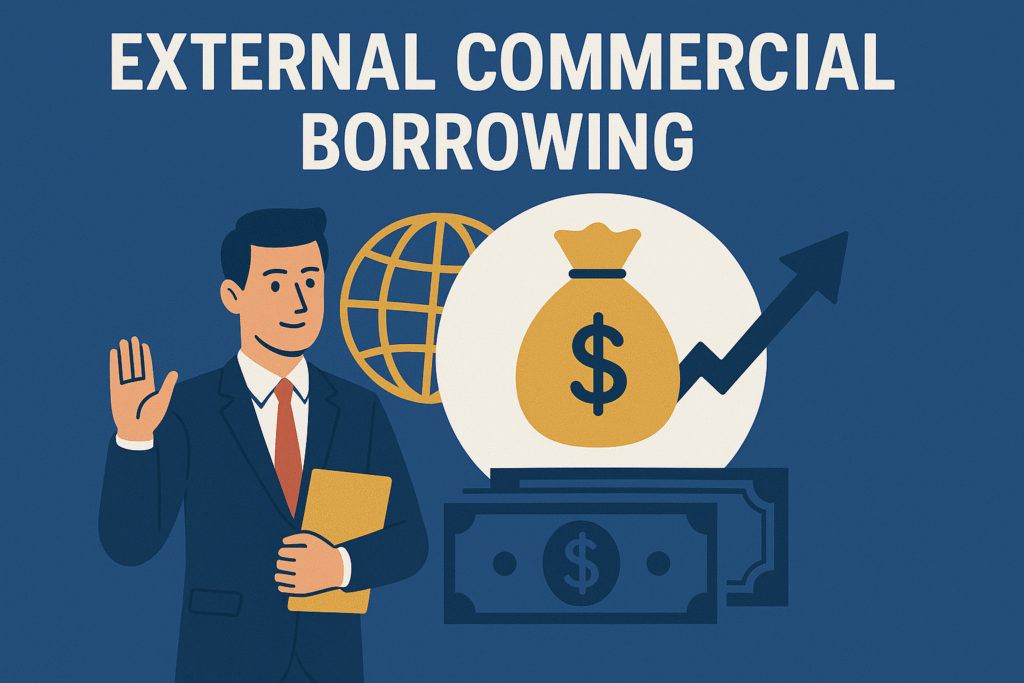
ECB refers to commercial loans availed from non-resident lenders (foreign banks, overseas branches/subsidiaries of Indian banks, export credit agencies, foreign suppliers, or even foreign group companies) in foreign currency or INR.
Eligible Borrowers
Indian companies which are eligible to receive Foreign Direct Investment (FDI) are allowed to obtain ECB. Resident Indian individuals are prohibited from obtaining ECB. Most Indian entities prefer engaging the best FEMA services in India to avoid documentation or structuring errors.
Key Routes
ECB is obtained through two routes:
- Automatic Route: No RBI approval needed up to USD 750 million per financial year per company (or equivalent). Minimum Average Maturity Period (MAMP) is 3 years (except for certain sectors like manufacturing where shorter tenures are allowed).
- Approval Route: Required for amounts above the automatic limit or for restricted end-uses.
Permitted Forms
ECB can be obtained in below forms:
- Foreign Currency denominated ECB (USD, EUR, JPY, etc.)
- Rupee-denominated ECB
- Foreign Currency Convertible Bonds (FCCBs)
All-in-cost Ceiling
All-in-Cost includes rate of interest, all other fees & charges. As per the extant ECB guidelines this All-in-Cost shall not exceed Benchmark rate + 450 to 500 basis points. This makes ECB one of the cheapest long-term funding sources.
Popular End-Uses
ECB proceeds shall only be used for the purpose they are raised for: capex, import of capital goods, new projects, modernization, on-lending by NBFCs/HFCs, and even repayment of existing rupee loans (under certain conditions).
Mandatory Compliances
- Form ECB-2 monthly reporting
- Strict negative end-use list (i.e., ECB funds shall not be used for real estate, equity investment, working capital except specific cases)
To avoid compliance lapses and penalties, businesses rely on FEMA consultants for ongoing monitoring.
Trade Credit (Buyer’s & Supplier’s Credit)
Trade Credit is short-term foreign currency funding specifically tied to import of goods/services.
Key Routes
- Automatic Route: Up to USD 150 million (or equivalent) per import transaction for Oil/gas refining & marketing companies, Airline and Shipping companies. For all other sectors, the limit under the automatic route is up to USD 50 million (or equivalent) per import transaction.
- Approval Route: Required for amounts above the automatic limit.
Key Features
- Maximum maturity: 1 year for non-capital goods; up to 3 years for capital goods under automatic route
- All-in-cost ceiling: Benchmark + 250 bps
- No end-use restrictions beyond the underlying import
Why Indian Companies Love These Instruments
- Interest savings of approximately Rs. 3–6 crore per Rs. 100 crore borrowed (compared to domestic MCLR rates of 9–11%)
- Natural hedge for export-oriented businesses
- Longer tenures (3–10 years) than most rupee loans
- Flexibility to choose fixed or floating rates
Challenges Involved
The only challenge involved is forex fluctuations. To protect yourself, proper hedging must be done.
For example, the USD to INR rate in 2015, on an average, was Rs.64, but in 2025 the rate is approximately Rs.90. Therefore, if you have borrowed USD-denominated ECB in 2015, you are required to pay 50% extra principal amount. This is the main shortcoming of foreign currency denominated ECB.
The Flip Side – Compliance is the Key
- Late filing: Rs.5,000 per day penalty
- End-use violation: Penalty up to 3 times the amount involved
This is why companies increasingly consult FEMA specialists early to structure foreign funding safely, ensuring full RBI compliance and zero litigation or penalties.
Bottom Line
In 2025, ECB and Trade Credit are not just funding options—they are strategic tools to stay globally competitive. Used wisely, they can reduce your cost of capital by 30–40% and give your balance sheet the firepower it needs to scale fast.
Raise capital smarter. Grow faster. Stay compliant — with the right FEMA consultant by your side.